Villefranche-sur-Mer: How the Riviera's Most Chromatically Vivid Harbour Village Became the Côte d'Azur's Most Cinematically Enchanting Luxury Address
April 3, 2026 · 15 min read
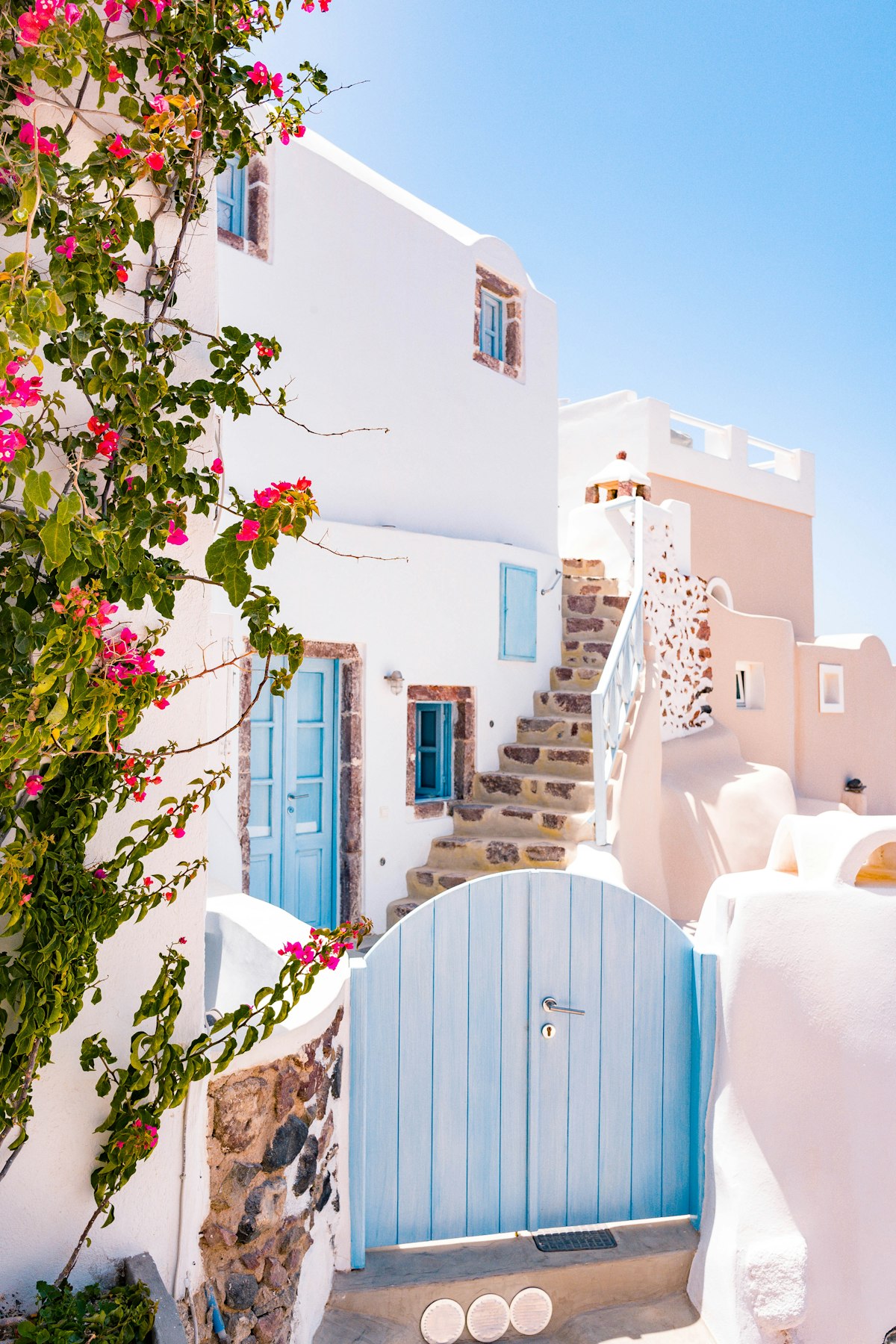
There is a moment, approaching Villefranche-sur-Mer from the Moyenne Corniche on a clear February morning, when the Mediterranean reveals itself in a shade of blue so theatrically saturated that it appears artificial — a colour more appropriate to a Technicolor film print than a body of water. The village materialises below as a cascade of ochre, terracotta, and faded rose, its buildings tumbling toward the harbour with the visual logic of a geological event rather than an architectural one. Jean Cocteau, who spent decades painting this view from every conceivable angle, called it "the world's most beautiful harbour." He was not given to understatement, but in this case, he may have been exercising restraint.
The Deepest Harbour
Villefranche's rade — its natural bay — is the deepest natural harbour on the French Mediterranean coast, with depths reaching 95 metres less than a kilometre from shore. This geological accident has shaped the village's entire history. The deep water attracted the Savoy navy in the 16th century, which built the Citadelle that still crowns the harbour's eastern promontory. It drew the Russian Imperial Fleet in the 19th century, which established a naval base and a scientific research station that operated until 1966. And it now accommodates the cruise ships and superyachts whose seasonal presence funds a significant portion of the local economy.
But the harbour's depth serves a subtler purpose: it ensures that the water visible from Villefranche's waterfront possesses a chromatic intensity unmatched anywhere on the Côte d'Azur. Deep water absorbs red light and reflects blue, and 95 metres of absorption produces a blue of almost absurd purity. On windless mornings, when the harbour's surface becomes a mirror, the reflected ochre of the waterfront buildings creates a colour palette — deep ultramarine, warm amber, weathered coral — that explains why this village has attracted painters since the 18th century and continues, in the age of digital saturation, to stop people in their tracks.
Cocteau's Chapel
The Chapelle Saint-Pierre, a 14th-century fishermen's chapel on the quay, was decorated by Jean Cocteau in 1957 — a project that took the artist-filmmaker three months of intensive work and produced what is arguably his masterpiece in any medium. The frescoes, depicting scenes from the life of Saint Peter and the life of the local fishing community (Cocteau made no distinction between the sacred and the quotidian), cover every surface of the small interior in a flowing linear style that draws equally on Byzantine iconography and Matisse's late paper cutouts.
The chapel functions as Villefranche's spiritual centre in a way that transcends the religious. It is where the village's aesthetic identity — the fusion of Mediterranean light, artisanal craftsmanship, and high-cultural patronage — finds its most concentrated expression. Cocteau chose Villefranche not because it was fashionable (that was Cannes and Saint-Tropez) but because it was honest — a working fishing village that had not yet learned to perform itself for an audience. That authenticity was precisely what attracted him, and its echoes persist in the village's contemporary character.
The Rue Obscure
Villefranche's most extraordinary architectural feature is invisible from above. The Rue Obscure — literally "Dark Street" — is a 130-metre covered passage running parallel to the waterfront, built in the 13th century as a defensive corridor and storage space for the port's commercial goods. Walking its length is a sensory inversion: the Mediterranean brilliance gives way to cool shadow, the sound of the harbour muffles, and the stone walls — three metres thick in places — exude a damp mineral smell that is the olfactory signature of genuine antiquity.
The Rue Obscure has survived bombardments (most recently by the Austro-Sardinian fleet in 1815 and Allied forces in 1944), earthquakes, and the relentless development pressure that has transformed most of the Côte d'Azur. Its persistence is partly structural — the passage bears the load of the buildings above and cannot be removed without destabilising the entire waterfront block — and partly symbolic. Villefranche protects its Rue Obscure because the Rue Obscure is evidence that this village is not a Riviera pastiche but a place with 800 years of continuous habitation. In a region where "historic" often means "built in 1920 and renovated to look historic," the Rue Obscure offers the genuine article.
The Residential Market: Altitude as Currency
Villefranche's real estate market operates on a vertical axis that is as legible as a geological cross-section. At the waterfront — the Quai Courbet and adjacent streets — apartments command €12,000-€18,000 per square metre, with premium units achieving significantly more. These are the properties with direct harbour views, the ones visible in every photograph of the village, and their supply is functionally fixed: the waterfront was fully built out by the 18th century, and no new construction is permitted within the conservation zone.
Ascending the hillside, prices initially decline before climbing again as properties gain elevation, view scope, and — crucially — privacy. The villas on the upper slopes, accessible by narrow lanes that defeat all but the most determined vehicles, command €15,000-€25,000 per square metre and offer panoramic views that encompass the harbour, Cap Ferrat, and — on days of exceptional clarity — the Italian coast as far as Bordighera. These are the properties that attract the international ultra-high-net-worth market: families from northern Europe, the Gulf, and — increasingly — North American technology wealth seeking a Riviera base that offers the authenticity of a village and the proximity of Nice Airport (ten minutes by helicopter, twenty by car).
Between the waterfront and the villas lies a middle market of townhouses and duplex apartments within the old village — properties with thick stone walls, uneven floors, and the kind of spatial irregularities that either enchant or infuriate, depending on the buyer's tolerance for the imperfections of medieval construction. This segment, priced at €8,000-€14,000 per square metre, has seen the strongest appreciation in recent years: a 12.7% compound annual growth rate over the past five years, driven by demand from a buyer cohort that has discovered what Cocteau knew in the 1950s — that Villefranche's imperfections are its perfections.
Cap Ferrat's Shadow, Villefranche's Light
The relationship between Villefranche and its neighbour Cap Ferrat — the peninsula that shelters the harbour's eastern flank — is one of the Riviera's most instructive contrasts. Cap Ferrat, with its gated estates and €50,000+ per-square-metre price tags, is where wealth goes to hide. Villefranche is where it goes to live. The distinction is not merely rhetorical. Cap Ferrat's residential streets are eerily quiet — high walls, security cameras, gardeners' vans the only signs of occupation. Villefranche's streets are loud with life: market vendors, schoolchildren, fishermen mending nets on the quay, the daily theatre of a Mediterranean village that has not yet been entirely conquered by money.
Many of Cap Ferrat's residents — those who maintain their vast properties primarily as investment vehicles, visiting three or four weeks per year — are Villefranche's most frequent diners. They cross the causeway to eat at La Mère Germaine (a quayside restaurant that has served bouillabaisse since 1938), to browse the Tuesday market, to experience the social warmth that their own gated compounds cannot provide. This dynamic — the wealthy leaving their expensive isolation to seek the company of a less expensive community — encapsulates a fundamental paradox of luxury real estate: the most valuable environments are often the ones that resist the full imposition of wealth.
The Cinematic Village
Villefranche's photogenic qualities have made it one of the most filmed locations on the Côte d'Azur. The waterfront has appeared in films ranging from the sublime (Vicky Cristina Barcelona used it as a stand-in for a fantasy Mediterranean) to the explosive (the opening sequence of the 1983 Bond film Never Say Never Again was filmed on the harbour steps). The village's role in popular cinema has created a curious phenomenon: visitors who have never been to Villefranche recognise it instantly, experiencing the arrival not as discovery but as confirmation.
This pre-existing familiarity — the sense of arriving at a place you already know — is itself a luxury asset. It eliminates the risk that accompanies most luxury purchases: the fear that the reality will disappoint the expectation. Villefranche delivers exactly what it promises. The harbour is exactly that blue. The buildings are exactly that ochre. The light, at golden hour, does exactly what the photographs suggested. In a luxury market increasingly characterised by the gap between marketing and reality, this consistency between image and experience is worth more than any architectural innovation or branded amenity.
What Villefranche-sur-Mer offers — and what justifies its position among the Riviera's most coveted addresses — is the intersection of three qualities that rarely coexist: genuine historical depth, natural beauty that requires no artificial enhancement, and a living community that has not yet been displaced by the wealth it attracts. The village is not preserved in amber; it is not a museum or a heritage theme park. It is a place where fishermen still sell their catch on the quay, where children attend the local school, where the market operates not for tourists but for residents. And in that ordinariness — an ordinariness that happens to unfold against the most beautiful harbour on the Mediterranean — lies the kind of luxury that no amount of money can manufacture. It can only be inherited, maintained, and — if the village is fortunate — shared.
About Riviera Latitudes
Riviera Latitudes is a premium digital publication exploring luxury, heritage, and lifestyle along the French and Italian Riviera. Part of the Latitudes Media network.