Villefranche-sur-Mer: How the Riviera's Deepest Natural Bay Became the Côte d'Azur's Most Intimately Mediterranean Luxury Address
March 30, 2026 · 16 min read
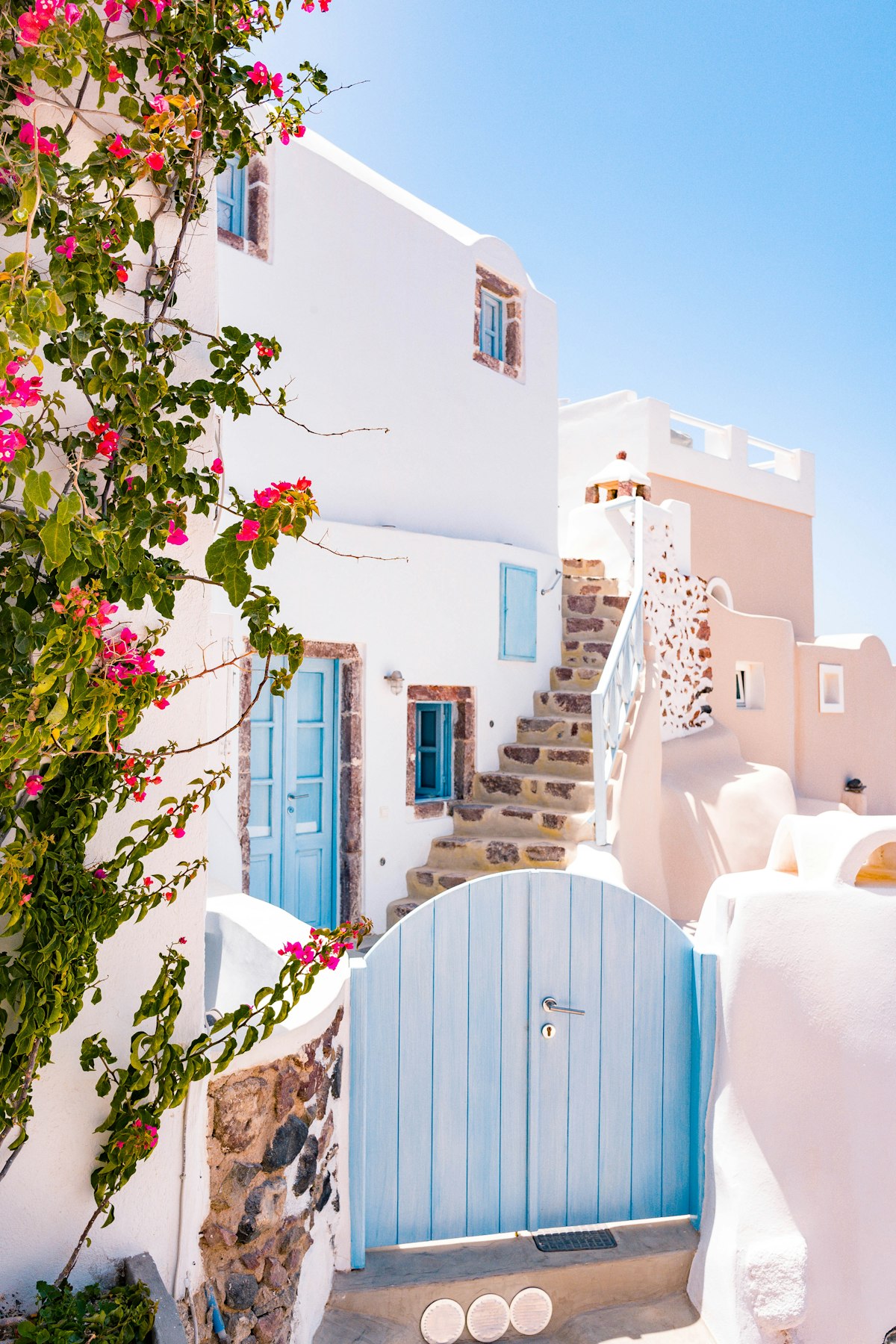
The bay at Villefranche-sur-Mer is, by any serious geographical measure, the finest natural harbour on the French Riviera. Sheltered by the mountainous mass of Mont Boron to the west and the jutting peninsula of Cap Ferrat to the east, its waters achieve a depth of 95 metres within a few hundred metres of shore — sufficient to accommodate the aircraft carriers of the U.S. Sixth Fleet, which maintained Villefranche as its Mediterranean home port from 1948 until de Gaulle's withdrawal from NATO's military command in 1966. That a town of barely 5,000 permanent residents should have hosted the world's most powerful naval force for nearly two decades tells you everything you need to know about Villefranche's geographical endowment: this is a harbour so naturally perfect that empires have competed for its shelter since the Greeks first sailed the Ligurian coast.
The Citadel and the Old Town
Villefranche's old town is a vertical labyrinth of medieval passages, covered stairways, and vaulted streets that cascade from the Citadelle Saint-Elme down to the waterfront with a density and authenticity that have survived both wartime bombardment and the corrosive forces of Riviera tourism. The Rue Obscure — a 130-metre covered street built in the thirteenth century as both commercial thoroughfare and defensive corridor — remains one of the oldest surviving covered passages in Europe, its stone vaulting blackened by centuries of use, its flagstones worn concave by the footsteps of Savoyard soldiers, Sardinian merchants, and the Cocteau-era artists who discovered in Villefranche's chiaroscuro streetscape an inexhaustible subject.
Jean Cocteau, who first visited in 1924, would become Villefranche's most celebrated artistic ambassador. His 1957 decoration of the Chapelle Saint-Pierre — a fourteenth-century fishermen's chapel on the harbour's edge, transformed into a luminous, pastel-toned meditation on the life of Saint Peter — remains the town's most visited cultural site. But Cocteau's relationship with Villefranche was not that of a tourist enchanted by a pretty view; it was the relationship of an artist who recognised in the town's layered, almost geological accretion of history and light a quality that the Riviera's more glamorous addresses — Cannes, Nice, Monte-Carlo — had already begun to lose to development and self-consciousness.
The Citadelle Saint-Elme, constructed in 1557 by the Duke of Savoy Emmanuel Philibert to defend the harbour against Ottoman naval raids, now houses the town hall, two museums (including a collection of works by the sculptor Volti), and an open-air theatre whose summer programmes draw audiences from across the Riviera. The citadel's massive, pentagonal bastions — designed to absorb cannon fire that would shatter a conventional wall — frame views of the bay that have not materially changed since the sixteenth century. From the ramparts, one looks down upon a crescent of ochre, terracotta, and pale yellow buildings arranged along the waterfront with the casual perfection that only centuries of organic growth can produce.
The Real Estate Paradox
Villefranche occupies a uniquely paradoxical position in the Riviera's luxury property market. It is, by any objective criterion, one of the most desirable addresses on the coast: a south-facing bay of exceptional beauty, five minutes from Nice's international airport, ten minutes from Monaco, adjacent to Cap Ferrat (home to the most expensive residential real estate per square metre in the world), and possessed of an authentic village character that has eluded virtually every other commune on the Côte d'Azur. And yet, it has never achieved the trophy-asset status of its neighbours.
The reason is topographical. Villefranche's terrain is vertiginously steep — the medieval town was built on a 40-degree slope, and many properties can be accessed only by stairways of fifty, eighty, or a hundred steps. For the demographic that drives ultra-luxury pricing — buyers aged 55-75, often purchasing retirement or holiday homes — this verticality is a genuine obstacle. A villa that requires an ascent equivalent to climbing six flights of stairs merely to reach the front door, however magnificent the view from the terrace, presents practical challenges that a flat-site property in Cannes or Mougins does not.
This topographical constraint has, paradoxically, preserved Villefranche's character. Because new development is physically difficult and planning regulations restrictive, the town has been spared the villa-isation that has transformed Cap d'Antibes and the construction frenzy that periodically convulses Cannes's La Californie district. Properties that come to market in Villefranche tend to be existing structures — historic houses, converted fishermen's cottages, Belle Époque villas — rather than new builds. The result is a housing stock that possesses the patina, the imperfection, and the individuality that mass-market luxury development inevitably destroys.
Current pricing reflects this paradox. Waterfront apartments in the old town — typically 80-150 square metres, with terraces overlooking the bay — trade between €8,000 and €15,000 per square metre, depending on condition, floor level, and view angle. Villas with direct water access (of which there are perhaps thirty in the entire commune) command €20,000-€35,000 per square metre. These figures are approximately 40% below equivalent properties on Cap Ferrat and 25% below comparable addresses in Beaulieu-sur-Mer — a discount that reflects the topographical constraint and that represents, for the buyer willing to embrace verticality, one of the Riviera's most compelling value propositions.
The Maritime Life
Villefranche's relationship with the sea is not decorative; it is constitutive. The town exists because of its bay, and the bay continues to shape every dimension of daily life. The Darse — the old military harbour, now converted to a marina accommodating vessels up to 30 metres — sits at the western end of the waterfront, its stone quays originally constructed in the sixteenth century to service the Savoyard fleet. The main anchorage, protected by the natural amphitheatre of the surrounding hills, remains one of the Riviera's most popular superyacht moorings, with vessels of 80 metres and above regularly anchoring in the deep water offshore during the summer season.
The Plage des Marinières — Villefranche's main beach, a 350-metre crescent of coarse sand backed by the waterfront buildings of the old town — is routinely ranked among the top three beaches on the French Riviera. Its appeal is atmospheric rather than infrastructural: there are no beach clubs, no DJs, no champagne service, no VIP sections. The beach is public, democratic, and unapologetically Mediterranean. Families spread towels on the sand, elderly Villefranchois swim their morning laps, and the afternoon light — reflected off the bay's deep blue surface and filtered through the specific quality of air that occurs when a south-facing shoreline is sheltered from the Mistral by a wall of coastal mountains — achieves a luminosity that has driven painters to despair for a century and a half.
The marine biology station, established in 1882 and now operated by the Sorbonne Université as the Institut de la Mer de Villefranche, occupies a handsome nineteenth-century building on the Quai de la Corderie. Its research into Mediterranean marine ecosystems — particularly Posidonia seagrass meadows and plankton ecology — has contributed to the protection of the bay's waters, which are among the cleanest and most biodiverse on the urbanised Riviera coast. This institutional presence adds an intellectual dimension to Villefranche that distinguishes it from purely recreational coastal towns: the bay is not merely beautiful but scientifically significant, and the town's residents understand this distinction.
The Gastronomic Register
Villefranche's restaurant scene operates on a register that would be considered modest by Riviera standards — and that is precisely its virtue. La Mère Germaine, occupying a waterfront terrace that extends almost to the water's edge, has served bouillabaisse and grilled Mediterranean fish to an international clientele since 1938. The recipe has not changed; the view has not changed; the experience of sitting at a zinc-topped table as the sun drops behind Mont Boron and the bay turns from turquoise to indigo to black has not changed. This consistency — this refusal to chase trends, to rebrand, to introduce a "concept" — is increasingly rare on a coastline where restaurants reinvent themselves with the frequency and desperation of reality television contestants.
The town's smaller establishments — Le Cosmo, La Trinquette, L'Oursin Bleu — serve the local population with honest, ingredient-driven Mediterranean cooking at prices that would be considered reasonable in a provincial French town and that are, by Riviera standards, almost revolutionary. A three-course lunch with wine for €25 is not unusual. This pricing reflects Villefranche's demographic reality: a permanent population that is predominantly French, predominantly middle-class, and predominantly uninterested in the performative luxury that drives pricing at establishments further along the coast. The restaurants serve the town; the town does not exist to service the restaurants.
The Villefranche Proposition
What Villefranche offers the discerning buyer is ultimately a temporal proposition: the opportunity to live within a Mediterranean townscape that has resisted, through a combination of topographical constraint, institutional protection, and communal will, the forces that have homogenised most of the Riviera coast. It is not the most convenient address, not the most fashionable, not the most expensive. It is, however, the most authentic — a town where the relationship between architecture and landscape, between community and sea, between past and present, remains legible and genuine in a way that the Riviera's more developed addresses can no longer honestly claim.
For the buyer who has done Cannes and found it performative, who has considered Monaco and found it synthetic, who has visited Cap Ferrat and found it sterile in its perfection, Villefranche represents the Riviera's answer to a question that luxury real estate rarely asks: what if the best address is the one that never tried to be one? The bay doesn't care about your net worth. The covered streets don't know your name. The light falls on everyone equally. And the deep, sheltering harbour — deep enough for aircraft carriers, calm enough for kayaks — does what it has done for three thousand years: it offers refuge, beauty, and the particular peace that comes from knowing you have arrived at a place that was perfect before you got there and will remain perfect long after you leave.
Riviera Latitudes · Luxury lifestyle intelligence from the French Riviera.
← Back to Riviera Latitudes ·
Latitudes Media ·
Monaco Latitudes ·
Italy Latitudes