Vallauris: How Picasso's Pottery Village Became the French Riviera's Most Artistically Authentic Luxury Address
March 27, 2026 · 13 min read
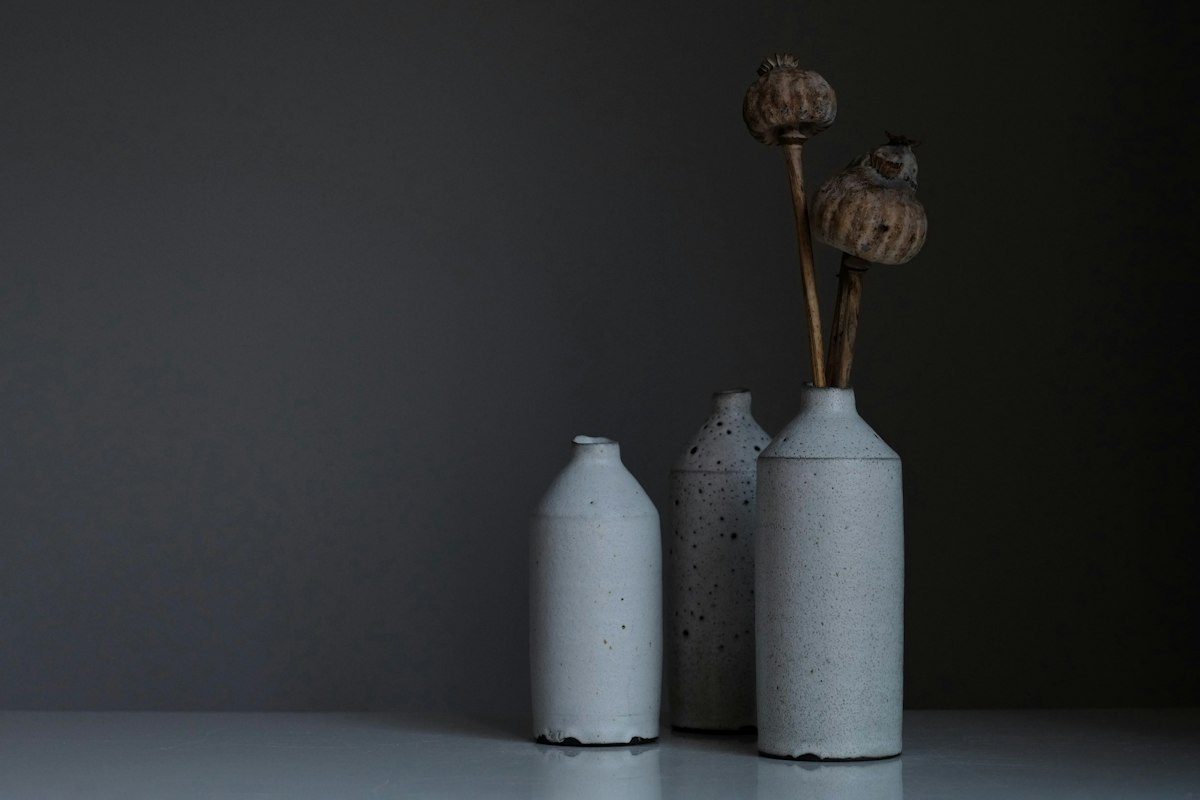
In the summer of 1948, Pablo Picasso walked into the Madoura pottery workshop in Vallauris, a small town in the hills above Golfe-Juan on the French Riviera, and asked to use the kiln. He was sixty-seven years old, already the most famous living artist in the world, and he had come not to paint but to make pots. Over the next twenty-three years — until his departure for Mougins in 1971 — Picasso would produce approximately 4,500 ceramic pieces at Madoura, transforming both his own practice and the identity of Vallauris itself. A town that had been making utilitarian pottery from its local red clay since Gallo-Roman times, and that had fallen into economic decline as mass production rendered its workshops uncompetitive, was reborn as the ceramics capital of the world — a transformation so complete that today, eight decades later, the name Vallauris remains inseparable from the dual concepts of artistic ceramics and the genius who made them possible.
The Clay Town: Two Thousand Years of Fire
Vallauris — from the Latin vallis aurea, "golden valley" — sits in a natural amphitheatre of hills approximately two kilometres from the Mediterranean coast, at an altitude of about seventy metres. The town's ceramic tradition predates Picasso by millennia: the particular quality of its clay — a fine-grained, iron-rich red earth extracted from deposits in the surrounding hills — was recognised by Roman potters who established workshops here in the first century AD. By the medieval period, Vallauris was one of the principal centres of utilitarian pottery production in Provence, its workshops producing the cooking pots, storage vessels, and oil lamps that supplied households across the region.
The town's fortunes rose and fell with the demand for handmade pottery. The eighteenth and nineteenth centuries were a golden age: Vallauris supported more than one hundred active workshops, and its annual pottery fair attracted buyers from across southern France. The twentieth century brought decline: industrial ceramics, produced more cheaply and consistently in factories, eroded the market for Vallauris's handmade wares, and by the 1940s, the town's pottery industry was moribund. Workshops closed. Young people left for Cannes and Nice. The kilns, some of which had been firing continuously for generations, went cold.
Picasso at Madoura: The Revolution
Picasso's arrival at Vallauris was not accidental. He had visited the annual pottery fair in 1946, where he met Suzanne and Georges Ramié, the owners of the Madoura workshop, and had been impressed by the technical possibilities of ceramic production — the interplay of form, colour, and fire that had occupied potters for thousands of years but that had barely been explored by contemporary fine artists. When he returned in 1948, it was with the intention not of dabbling but of immersing himself completely in the medium, approaching clay with the same voracious energy and inventive freedom that he had brought to painting, sculpture, printmaking, and every other medium he had colonised over the previous five decades.
The ceramics that resulted were extraordinary. Picasso treated plates, vases, and pitchers not as utilitarian objects to be decorated but as surfaces and forms to be reinvented. He painted plates with bullfight scenes of such dynamic energy that the circular format seemed designed for the subject. He deformed vases into zoomorphic figures — owls, pigeons, bulls — that blurred the boundary between pottery and sculpture. He developed techniques of oxide painting and engobe application that the Ramié workshop's technicians initially considered impossible, then learned to execute at his direction. The Madoura workshop, which had been producing conventional Provençal pottery, became, in effect, the world's most prestigious ceramic studio — a place where the greatest artist of the twentieth century worked daily, surrounded by professional potters whose technical mastery he both depended upon and continually pushed beyond its known limits.
The Picasso Effect: A Town Reborn
Picasso's presence at Vallauris attracted other artists — painters, sculptors, ceramicists — who were drawn both by the association with the master and by the practical infrastructure that the town's pottery tradition provided: workshops with kilns, suppliers of clay and glazes, a community of skilled artisans accustomed to working with creative professionals. By the early 1950s, Vallauris had been transformed from a declining industrial town into one of the principal artistic communities on the Riviera, its ateliers producing a range of work that extended from Picasso-influenced decorative ceramics to entirely independent artistic expressions in clay.
The transformation was not merely cultural but economic. The town's population grew. New galleries and shops opened along the Avenue Georges Clemenceau and the Rue du Plan. The annual pottery biennial, which Picasso helped establish, attracted international attention. Tourists began to arrive — initially art professionals and collectors, then a broader public drawn by the Picasso association — and the infrastructure of hospitality developed to accommodate them. Vallauris, which had been dying, was alive again — and the agent of its resurrection was a single artist who had chosen to make pots.
Man with a Sheep: The Gift to the Town
In 1950, Picasso donated to the town of Vallauris a life-sized bronze sculpture — L'Homme au Mouton (Man with a Sheep) — which was installed in the Place Paul Isnard, the small square in front of the parish church, where it stands today. The sculpture — a standing male figure holding a sheep across his shoulders, in a pose that references simultaneously the classical Moschophoros (calf-bearer) of ancient Greek sculpture and the Christian iconography of the Good Shepherd — is one of Picasso's most accessible and emotionally direct works: a figure of such simple, monumental humanity that it functions as both a civic landmark and an artwork of international significance.
The gesture — a gift from the world's most famous artist to a small Provençal town — was characteristic of Picasso's relationship with Vallauris, which was genuine, reciprocal, and founded on mutual respect. He was not a tourist in the town; he was, for twenty-three years, a resident and a neighbour, buying his bread at the local boulangerie, attending the bullfights that were staged in the town's small arena, participating in the annual pottery fair. The town, in return, gave him what money and fame could not provide: a community of craftspeople who took their work seriously, a tradition that predated his arrival by two thousand years, and the daily proximity to fire, clay, and the transformative process of the kiln.
The Musée National Picasso: War and Peace in a Chapel
The Musée National Picasso-Vallauris occupies the chapel of the former priory of the Order of Lérins — a Romanesque structure of twelfth-century origin whose barrel-vaulted interior provides the setting for one of Picasso's most ambitious works: La Guerre et la Paix (War and Peace), a monumental painted composition that covers the chapel's entire ceiling and walls. Executed in 1952, the work is Picasso's response to the Korean War and, more broadly, to the Cold War anxieties that pervaded the early 1950s. The War panel — a chaotic, terrifying procession of armed figures, flames, and destruction — confronts the visitor upon entry. The Peace panel — a pastoral scene of dancing figures, a ploughman, a mother nursing a child — unfolds on the opposite wall. The effect, in the intimate space of the chapel, is overwhelming: the visitor stands physically between war and peace, surrounded by images whose scale and intensity make intellectual distance impossible.
The museum, expanded in recent years to include a significant collection of Picasso's Vallauris-period ceramics and a rotating programme of exhibitions focused on contemporary ceramics, is one of the most important Picasso sites in France — less visited than the Paris museum or the Barcelona collection but, in its intimacy and its connection to the specific place where the work was created, arguably more moving.
Vallauris Today: The Living Tradition
The ceramics tradition that Picasso revived at Vallauris continues, adapted to contemporary conditions but retaining the essential character that attracted the artist in the first place. The Avenue Georges Clemenceau and its side streets harbour approximately thirty active galleries and ateliers, producing work that ranges from faithful reproductions of traditional Provençal pottery to aggressively contemporary ceramic sculpture. The biennial ceramics festival brings international artists to the town. The Madoura workshop, though no longer producing new work, remains a landmark and a site of pilgrimage for ceramics enthusiasts and Picasso scholars.
The new generation of Vallauris ceramicists — many of them graduates of the École des Beaux-Arts or of the prestigious ceramics programmes at Limoges and Sèvres — are producing work of genuine quality and originality, drawing on the town's tradition while refusing to be confined by it. Their presence ensures that Vallauris remains a working creative community rather than a museum of its own past — a distinction that is crucial to the town's character and to its appeal as a luxury address for buyers who value authenticity over pedigree.
Getting There & Practical Intelligence
Vallauris is situated between Cannes (seven kilometres west) and Antibes/Juan-les-Pins (four kilometres east), accessible from Nice airport in approximately thirty minutes via the A8 motorway. The town is also served by regular bus connections from Cannes and Antibes. Golfe-Juan, the coastal extension of Vallauris, offers beaches, harbour restaurants, and the quay where Napoleon landed on his return from Elba in 1815.
The optimal visiting strategy combines the hilltop town (morning: museum, ateliers, the Man with a Sheep in the square) with the coast (afternoon: lunch at Golfe-Juan, beach). The ceramics biennial (held in even-numbered years) is the town's principal cultural event and significantly enhances the visiting experience. Year-round, the ateliers welcome visitors — many offer demonstrations and short workshops — and the galleries along the avenue provide browsing of genuine quality, with prices that range from accessible souvenir to serious collector's investment.
Published by Riviera Latitudes · Part of the Latitudes Media network