Théoule-sur-Mer: How the Esterel's Red Porphyry Coastline Became the Western Riviera's Most Geologically Dramatic Luxury Address
April 2, 2026 · 16 min read
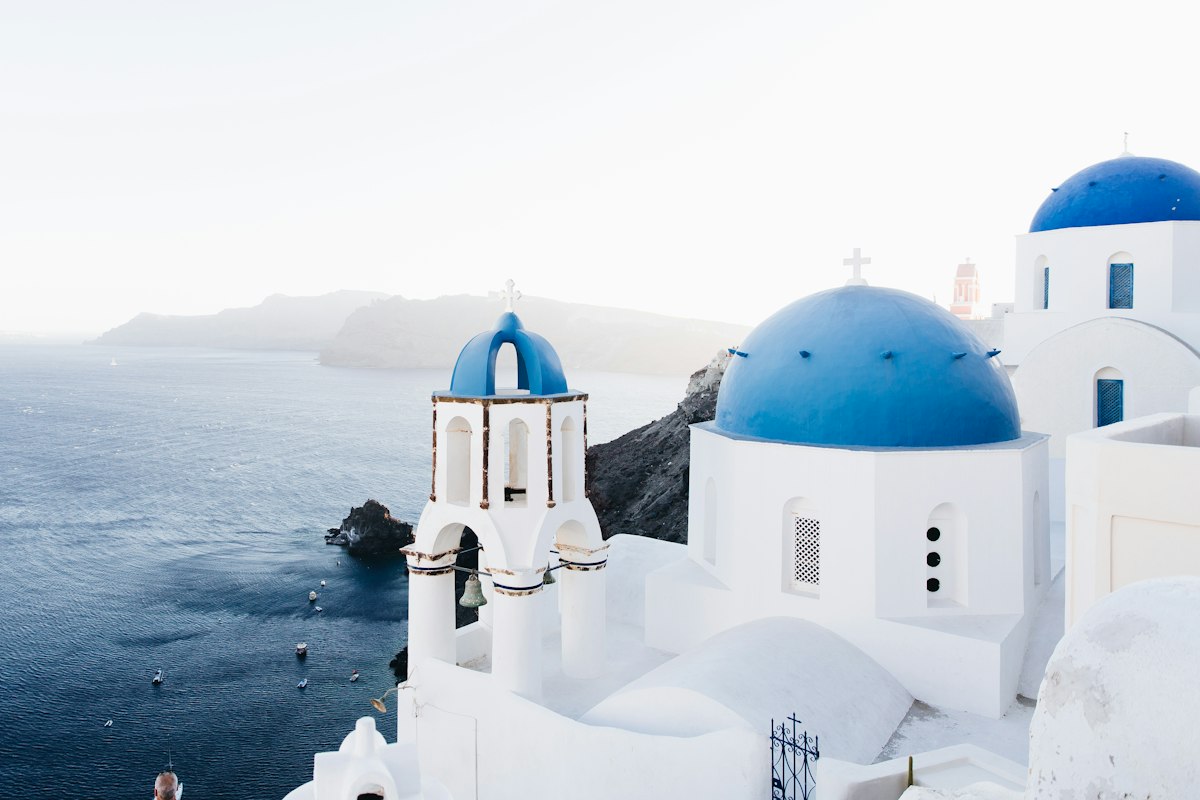
The geology arrives first. Before you notice the village, before you register the small harbour or the medieval watchtower perched above the bay, you see the rock — a deep, oxidised red that the geological literature calls rhyolitic porphyry and that the eye, unprepared, processes as something almost extraterrestrial. The Esterel massif, of which Théoule-sur-Mer occupies the eastern maritime flank, is a 32,000-hectare remnant of Permian volcanism, its rocks formed between 250 and 280 million years ago when the supercontinent Pangaea was tearing itself apart and magma surged through the fractures. The iron-rich minerals that give the stone its colour — hematite, goethite, limonite — have been oxidising in Mediterranean air for millennia, and the result is a palette that shifts from terracotta to crimson to near-purple depending on the angle of light, the humidity, and the hour of day.
The Chromatic Geography
The contrast between this volcanic red and the Mediterranean blue is, quite simply, the most visually arresting encounter on the entire French coastline. The Riviera from Menton to Nice is defined by limestone — white cliffs, grey-beige garrigue, the chalky pallor of maritime Alps. From Cannes westward to Saint-Raphaël, the geology pivots abruptly to the Esterel's igneous palette, and the landscape acquires a wildness, an untamed mineral intensity, that is completely absent from the groomed elegance of the eastern Côte d'Azur.
Théoule-sur-Mer sits at the precise transition point — the hinge between these two geological worlds. Its eastern boundary abuts the manicured urbanity of La Napoule and Mandelieu; its western and southern flanks plunge into the raw, roadless calanques of the Esterel coast. From certain vantage points in the commune's upper reaches, one can see both worlds simultaneously: the white geometry of Cannes's Croisette stretching east along the Golfe de la Napoule, and the red headlands of the Esterel tumbling west toward Agay and Saint-Raphaël with not a building in sight. It is a view that compresses the entire range of the Riviera experience — civilised and savage, constructed and primordial — into a single panorama.
The Village and Its Scale
Théoule-sur-Mer is, by Riviera standards, almost comically small. The commune's permanent population hovers around 1,500 — roughly the capacity of a medium-sized Parisian apartment building. The village centre consists of a single waterfront road, a harbour accommodating perhaps eighty pleasure boats, a handful of restaurants, a boulangerie, a tabac, and a miniature beach of imported sand backed by a retaining wall of local red stone. The Château de Théoule — a former soap factory converted to a fortified manor in the eighteenth century — overlooks the harbour from a modest promontory, its crenellated profile lending the village a fairy-tale quality that seems almost deliberate in its charm.
This diminutive scale is not the result of neglect or failure to develop. It is the consequence of topography and protection. The Esterel massif rises directly behind the village at gradients that make large-scale construction physically impossible — roads hairpin through dense maritime pine and cork oak forest, building sites are carved from rock at enormous expense, and the French Conservatoire du Littoral has progressively acquired the most sensitive coastal parcels, removing them permanently from the development pipeline. The commune's Plan Local d'Urbanisme is among the most restrictive on the Côte d'Azur, with building heights capped at two storeys in most zones and new construction requiring architectural review that has been known to reject proposals for insufficiently harmonising with the natural landscape.
The Calanques
Théoule's most extraordinary asset lies not in the village but in the coastline to its south and west. The Corniche de l'Esterel — a narrow road cut into the cliff face by convict labour in the early twentieth century — threads along a succession of calanques (narrow, steep-walled inlets) whose beauty is of a different order from anything else on the Riviera. These are not the polished coves of Antibes or the groomed plages of Pampelonne; they are geological events — places where the red rock has been sculpted by wave action into arches, columns, grottoes, and tide pools of almost hallucinogenic clarity.
The Calanque de l'Aiguille, named for a slender pinnacle of porphyry that rises from the water like a crimson needle, is accessible only by boat or by a 40-minute scramble through dense maquis from the corniche road. The Calanque du Trayas, slightly more accessible, offers swimming in water so transparent that the red-rock seabed is visible at depths of eight metres. The Pointe de l'Esquillon, the most dramatic headland in the sequence, presents a vertical cliff face of 70 metres that catches the late afternoon sun with such intensity that the rock appears to be illuminated from within — a phenomenon known locally as "l'heure rouge" and that has been documented in the paintings of Paul Signac, Henri-Edmond Cross, and the lesser-known but equally gifted Théo van Rysselberghe, all of whom worked in the Esterel between 1900 and 1910.
The Property Market: Scarcity as Value
Théoule-sur-Mer's real estate market is, by necessity, one of the smallest on the Riviera. The commune contains approximately 2,800 residential units in total — a figure that includes everything from studio apartments in the Miramar development to clifftop villas commanding views from Cap Roux to the Îles de Lérins. In a typical year, between 60 and 80 properties change hands. The market's defining characteristic is not price (though prices are substantial) but inventory: there is almost nothing available, almost ever.
The premium properties — waterfront villas with private access to a calanque or perched above the coast with unobstructed Mediterranean views — number fewer than 200 in the entire commune. Of these, perhaps five to eight come to market in any given year, almost exclusively through private networks rather than public listings. A four-bedroom villa with sea views and pool in the Miramar-Esterel sector currently commands €2.5-4.5 million — approximately 30% below equivalent properties in Cannes's La Californie and 50% below Super-Cannes. A waterfront property with direct sea access, of which there are perhaps forty in the commune, would command €5-12 million depending on condition and the quality of the calanque access.
This pricing discount relative to Cannes — Théoule is just twelve minutes from La Croisette by car — represents what experienced Riviera agents describe as the "geological premium in reverse": buyers who are seeking polished sophistication and restaurant walkability choose Cannes; buyers who are seeking geological drama, privacy, and an authentic relationship with the Mediterranean landscape choose Théoule. The two markets draw from overlapping but distinct buyer pools, and the spread between them has remained remarkably stable for two decades.
The Tiara Miramar: Five-Star Anchor
The Tiara Miramar Beach Hotel & Spa, perched on a cliff above the Anse de Théoule, is the commune's sole five-star establishment and the property that has done more than any other to position Théoule in the international luxury consciousness. The hotel — a 59-room property with a private beach, infinity pool cantilevered over the bay, and a Michelin-starred restaurant (L'Or Bleu) whose terrace offers what is arguably the finest dining view on the western Riviera — attracts a clientele that skews older, wealthier, and more Francophone than the typical Riviera five-star guest.
The Miramar's significance to Théoule's property market is both direct and atmospheric. Directly, a significant proportion of property purchases in the commune are made by guests who have stayed at the hotel — the classic Riviera conversion from visitor to investor. Atmospherically, the hotel's existence confirms Théoule's luxury credentials without overwhelming the village's intimate character. Unlike the grand palaces of Cannes and Nice, the Miramar operates at a human scale, and its presence enhances rather than displaces the local identity.
The Théoule Proposition
Théoule-sur-Mer offers something that has become almost extinct on the developed Mediterranean coast: a luxury address whose primary value proposition is geological. Not architectural, not gastronomic, not social — geological. The red rock is the product. The contrast of porphyry and seawater is the amenity. The calanques are the neighbourhood. Everything else — the village, the restaurants, the Miramar — is support infrastructure for the experience of living on the edge of a 280-million-year-old volcanic landscape that has been sculpted by the Mediterranean into forms of such chromatic intensity that they render most man-made luxury environments pale and artificial by comparison.
For the buyer who has exhausted the polished perfections of the eastern Riviera — who has owned the Cannes villa, attended the galas, walked the Croisette in July, and emerged wanting something rawer, more elemental, more honest — Théoule is where the search ends. Not because it is better than Cannes or Cap Ferrat or Saint-Jean-Cap-Ferrat, but because it is fundamentally different: a place where the landscape does not serve the architecture but where the architecture — such as it is — serves the landscape. Where the house is the frame and the view is the painting. Where the luxury is not in what has been built but in what has been left alone.
The red rock does not negotiate. It does not rebrand. It does not chase trends or court influencers. It has been oxidising in Mediterranean salt air for a quarter of a billion years, and it will continue to do so long after the last villa has returned to rubble. To live at Théoule is to be a temporary guest of a geological permanence so absolute that it makes every human ambition — including the ambition to own a piece of it — seem both absurd and entirely justified. That tension, between the ephemeral and the eternal, is the essence of the place. It cannot be manufactured. It cannot be replicated. It can only be found, at the point where the white Riviera ends and the red one begins.
Riviera Latitudes · Luxury lifestyle intelligence from the French Riviera.
← Back to Riviera Latitudes ·
Latitudes Media ·
Dubai Latitudes ·
Monaco Latitudes