Tende & the Vallée des Merveilles: How the Riviera's Secret Alpine Hinterland Became Europe's Most Archaeologically Sublime Luxury Frontier
March 27, 2026 · 14 min read
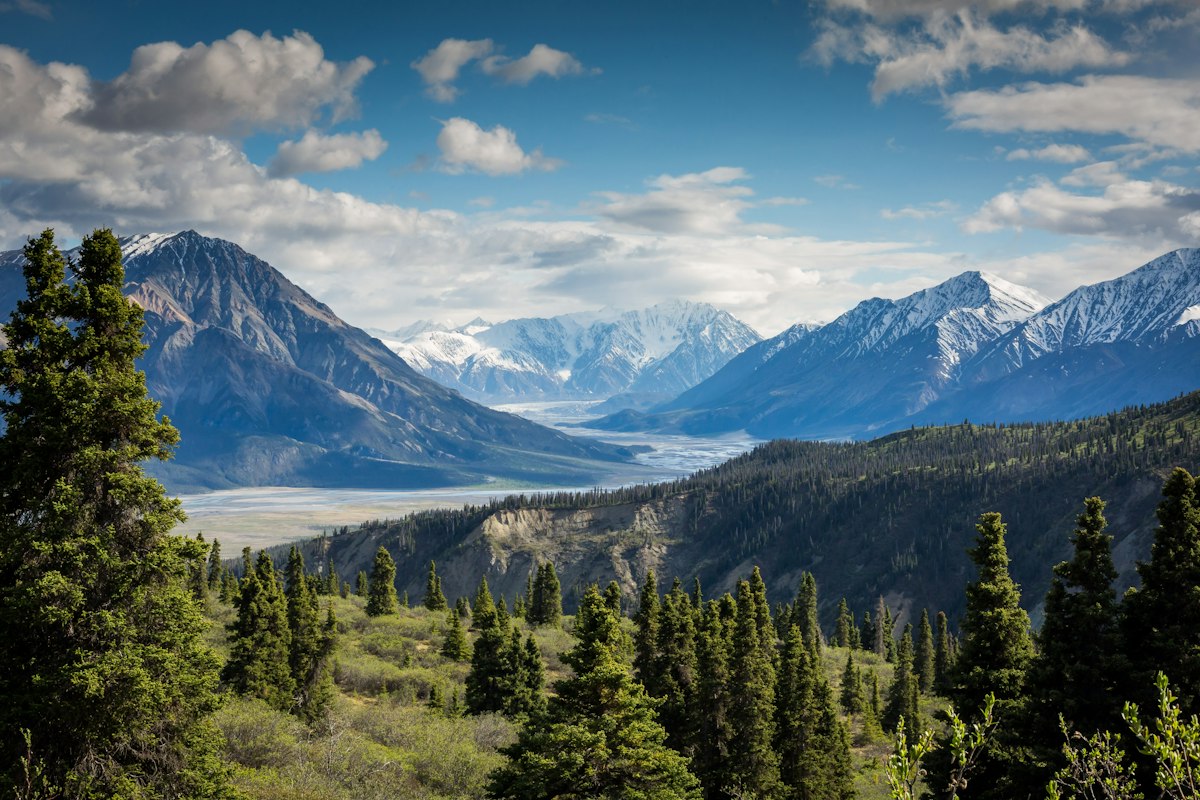
There is a valley in the mountains above Nice — ninety minutes by car from the Promenade des Anglais, sixty from the Casino de Monte-Carlo — where approximately 40,000 engravings carved into glacially polished rock surfaces between 3,300 and 1,800 BCE constitute one of the largest and most significant concentrations of prehistoric art in Europe. The Vallée des Merveilles — the Valley of Marvels — takes its name not from modern tourism but from the accounts of the earliest recorded visitors, fifteenth-century travellers who stumbled upon the engravings and attributed them to sorcery. Five centuries and innumerable archaeological expeditions later, the valley retains its capacity to astonish: to stand at 2,500 metres altitude, surrounded by peaks that rise to over 3,000 metres, and to trace with your finger the outline of a horned figure carved into orange-red schist nearly five thousand years ago, is to experience a form of temporal vertigo that no museum can replicate.
Mount Bégo: The Sacred Mountain
The engravings are concentrated on the slopes of Mount Bégo (2,872 metres), a peak of distinctive appearance — its summit is a dark, pyramidal mass of volcanic rock that attracts lightning with uncanny frequency — that Bronze Age peoples appear to have regarded as sacred. The combination of frequent storms, the mountain's dominant visual presence, and the strikingly coloured schist (a metamorphic rock that weathers to deep oranges and purples) created a landscape that was, for the pre-literate cultures of the Maritime Alps, charged with numinous significance. The engravings — which depict cattle, agricultural implements, geometric patterns, weapons, and human figures — are concentrated in two main zones: the Vallée des Merveilles itself, on the mountain's western flank, and the nearby Vallée de Fontanalba to the north.
The iconography suggests an agricultural people for whom cattle and the plough were central to both economy and cosmology. The most famous engraving — the so-called "Sorcerer" (le Sorcier) or "Chief of the Tribe," a humanoid figure with upraised arms and horned head — has become the symbol of the site and of the Musée des Merveilles in Tende. But the cumulative effect of the site is more powerful than any individual image: it is the sheer quantity of engravings, spread across rock surfaces that cover an area of approximately fourteen square kilometres, that communicates the intensity of the relationship between these ancient people and this mountain. Whatever Mount Bégo meant to them — and the scholarly debate continues — they returned to it, generation after generation, for more than a millennium, to inscribe their marks upon its rocks.
Tende: The Border Town
The town of Tende — the principal settlement of the upper Roya valley and the gateway to the Vallée des Merveilles — possesses a history as layered and complex as the valley's archaeology. Perched on a steep hillside at 816 metres altitude, Tende was Italian territory until 1947, when the Treaty of Paris transferred it to France along with the rest of the upper Roya valley — one of the last significant territorial adjustments in Western Europe. The town's architecture reflects this dual heritage: the dark schist houses with their green serpentine lintels, the Italian campaniles, the narrow passages and vaulted arcades speak of a culture that was Ligurian, Provençal, and Piedmontese simultaneously, and that has been French for less than eighty years.
The Musée des Merveilles, housed in a purpose-built structure in the town centre (designed by architect Jean-Claude Dondel and opened in 1996), provides the essential interpretive context for any visit to the valley. The museum's collection includes casts of the most significant engravings, archaeological artefacts from excavation sites in the valley, and a comprehensive documentary presentation that places the Merveilles engravings within the broader context of European Bronze Age culture. But its greatest achievement is atmospheric: the museum's design — dark, contemplative, with the engravings lit to evoke the conditions under which they were created — prepares the visitor for the experience of the valley itself, where the art is not displayed on walls but discovered on rocks, in the open air, under the same sky that the Bronze Age engravers knew.
The Train des Merveilles: The Most Beautiful Railway
The railway line that connects Nice to Tende — via Sospel, Breil-sur-Roya, and the spectacular gorges of the Roya valley — is one of the most scenic rail journeys in France, rivalling the better-known lines of the Swiss Alps for dramatic intensity while remaining almost entirely unknown to the international traveller. The line, engineered in the late nineteenth century as a connection between Nice and Turin, ascends from sea level to over 1,000 metres through a landscape that shifts, within ninety minutes, from Mediterranean coastal scrub to Alpine forest, passing through tunnels carved through solid rock and across viaducts that span gorges of vertiginous depth.
The Train des Merveilles — a dedicated tourist service that operates during the summer months with commentary on the landscape and history — provides the most relaxing and scenically rewarding approach to Tende. But even the regular TER service, which runs year-round, offers a journey of such consistent beauty that the arrival in Tende — the train emerging from a tunnel directly into the station, with the town's dark stone houses rising steeply above — feels less like a railway terminus than an entrance to another world.
The Mercantour National Park: Wilderness Above the Riviera
The Vallée des Merveilles lies within the Parc National du Mercantour — one of France's eleven national parks and the only one that encompasses territory from the Mediterranean climate zone to the high Alpine. The park covers 685 square kilometres and extends from an altitude of approximately 500 metres to 3,143 metres (the summit of Cime du Gélas, the highest peak in the Alpes-Maritimes), harbouring a biodiversity of extraordinary richness: over 2,000 plant species (including forty endemic to the region), chamois, ibex, golden eagles, bearded vultures (reintroduced in 2022), wolves (which returned naturally from Italy in the 1990s), and, in the park's deepest forests, the European lynx.
For the luxury traveller accustomed to the manicured landscapes of the coast — the palm-lined promenades, the hotel gardens, the carefully maintained beaches — the Mercantour offers an experience of genuine wilderness that is, in the European context, increasingly rare and correspondingly valuable. The contrast between the two worlds — the hyper-civilised littoral and the untamed alpine hinterland, separated by less than two hours of travel — is one of the most compelling aspects of the Riviera proposition, and one that remains almost entirely unexploited by the luxury travel industry.
The Roya Valley: Baroque Art in the Mountains
The villages of the Roya valley — Saorge, La Brigue, Fontan — contain Baroque churches of such unexpected richness that visitors from the coast, accustomed to the restrained classicism of Niçois architecture, react with genuine astonishment. The Chapelle Notre-Dame des Fontaines at La Brigue — known as the "Sistine Chapel of the Alps" — contains a complete cycle of frescoes by Giovanni Canavesio (1492) depicting the Passion of Christ with an intensity and narrative vivacity that rivals the great fresco cycles of Tuscany. The figures are expressive, the colours — preserved by the chapel's stable, cool interior climate — remain vivid after five centuries, and the overall effect — of stepping from a rural mountain path into a space of overwhelming pictorial ambition — is one of the great artistic surprises of southern France.
Saorge, often described as the most beautiful village in the Roya valley, occupies a natural amphitheatre above the river, its houses arranged in tiers of such geometric regularity that the village appears, from the opposite bank, to have been designed rather than evolved. The former Franciscan monastery (now a writers' residency operated by the Centre des Monuments Nationaux) offers accommodation of monastic simplicity and extraordinary beauty: cells with views over the valley, a cloister garden planted with Mediterranean aromatics, and a silence broken only by birdsong and the distant sound of the river. It is, for those willing to embrace its austerity, one of the most distinctive luxury experiences on the Riviera — luxury defined not by thread count and room service but by beauty, silence, and the absence of everything superfluous.
Getting There & Practical Intelligence
Nice is the gateway, with the Train des Merveilles departing from Nice-Ville station (journey time approximately two hours to Tende; summer tourist service with commentary, or year-round TER). By car, the D6204 follows the Roya valley from Ventimiglia (approximately ninety minutes from Nice via the A8 motorway) — a spectacular drive but demanding, with numerous tunnels and narrow sections. The Vallée des Merveilles is accessible only on foot from the Lac des Mesches car park (approximately two hours' walk to the main engraving zone); visits to the engraved areas are mandatory guided, June to October (reserve through the Mercantour National Park office).
The hiking season extends from June to early October, with July and August offering the most reliable weather at altitude. The approach walk is moderate but requires reasonable fitness and mountain footwear. Weather in the mountains can change rapidly: carry waterproofs and warm layers even on apparently clear days. Accommodation in Tende ranges from simple but characterful mountain hotels to gîtes and the Auberge de la Roya; for luxury-level accommodation, the coastal hotels of Menton (forty-five minutes south) or Monaco provide the closest upscale options, with Tende serving as a day excursion.
Published by Riviera Latitudes · Part of the Latitudes Media network