Roquebrune-Cap-Martin: How Le Corbusier's Final Shore Became the Riviera's Most Architecturally Mythologised Luxury Address
March 26, 2026 · 14 min read
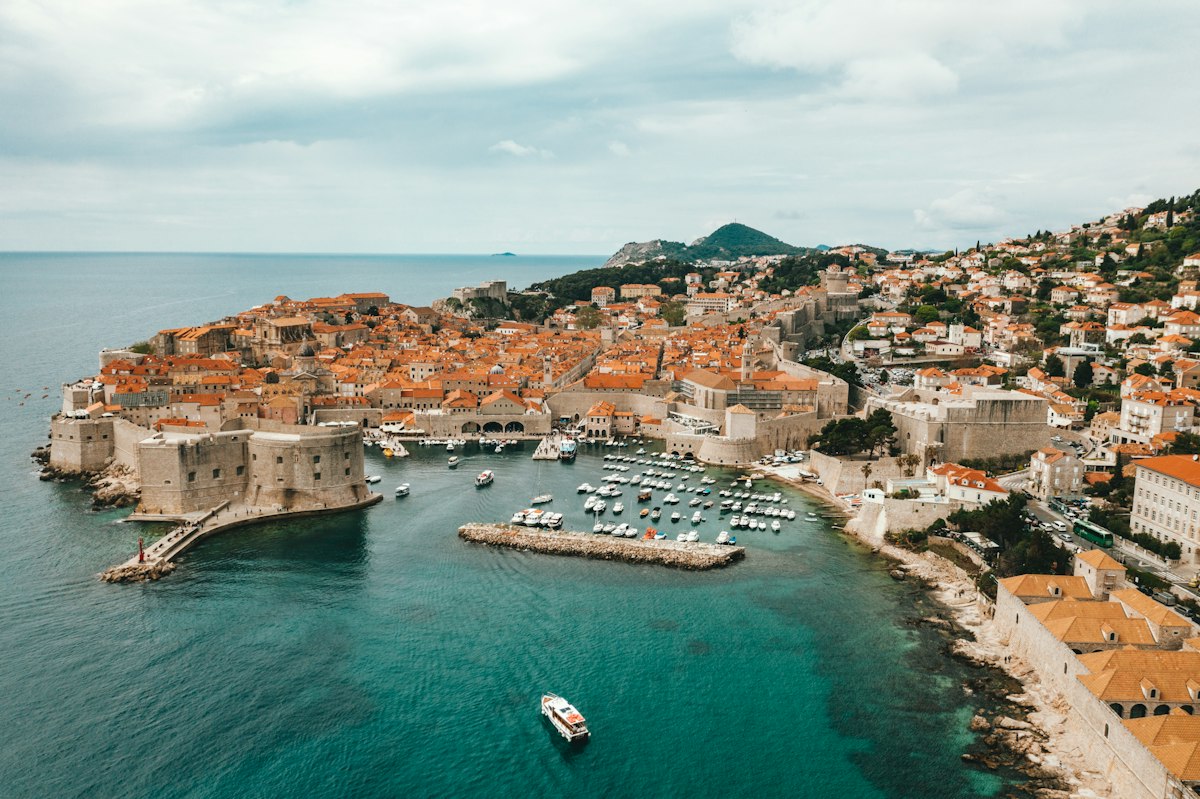
On the morning of August 27, 1965, Charles-Édouard Jeanneret — Le Corbusier — walked down to the Mediterranean from his tiny cabanon on Cap Martin and entered the water for his customary swim. He did not return. The greatest architect of the twentieth century died in the sea he had spent decades contemplating from a wooden cabin measuring precisely 3.66 by 3.66 metres — a space he considered the minimum cell of human habitation, and which he preferred, for its proximity to the essential, over every grand commission he had ever completed. That this shore, this particular conjunction of limestone, pine, and turquoise water, held Le Corbusier's final devotion tells us something about Roquebrune-Cap-Martin that no property listing can convey: this is a place whose beauty operates at the level of intellectual conviction.
The Medieval Village: Verticality Before Monaco
Long before Monaco transformed verticality into a development philosophy, the medieval village of Roquebrune had mastered it as a defensive necessity. Perched at 300 metres above the sea on a limestone spur, the village clusters around the oldest feudal castle in France — a tenth-century donjon whose walls, five metres thick at the base, have withstood nine centuries of siege, earthquake, and neglect. The streets that wind upward from the Place des Deux Frères are not so much paths as staircases, their steps worn to concavity by a millennium of footfall, their archways supporting rooms that bridge the gaps between buildings like architectural ligaments.
The views from the castle terrace encompass what is arguably the most geographically compressed panorama on the Mediterranean coast: Monaco's towers immediately to the west, Cap Martin's wooded peninsula below, Menton's Italianate waterfront to the east, and, on clear days, the coast of Liguria stretching toward Genoa. It is a view that compresses three nations — France, Monaco, and Italy — into a single glance, a reminder that borders here are political fictions imposed on a geographical continuum.
Cap Martin: The Peninsula of Architectural Ghosts
The Cap Martin peninsula, extending south from the medieval village into the Mediterranean, contains the highest concentration of architecturally significant twentieth-century buildings on the Riviera — perhaps in Europe. Eileen Gray's Villa E-1027 (1926-1929), designed as a collaborative meditation on the relationship between interior space and the sea, is now recognised as one of the masterpieces of early modernism: a building whose every element — the adjustable tables, the built-in furniture, the nautical railings — was designed by Gray herself, creating a total work of art that anticipates by decades the contemporary obsession with integrated design.
Le Corbusier, who visited E-1027 as a guest and controversially painted murals on its walls without Gray's permission, was so captivated by the site that he built his cabanon adjacent to the villa in 1952. This tiny structure — essentially a monk's cell with a sea view — became his most personal project, a demonstration that luxury, properly understood, is not a matter of square footage but of proportion, light, and relationship to landscape. The cabanon, along with E-1027 and several associated structures, was inscribed on the UNESCO World Heritage List in 2016, confirming Cap Martin's status as sacred ground in the history of architecture.
The Promenade Le Corbusier
The coastal path that bears Le Corbusier's name — the Promenade Le Corbusier — follows the shoreline of Cap Martin for approximately two kilometres, from the Plage du Buse to Monte Carlo Beach. It is, without exaggeration, one of the great walks of the Mediterranean world. The path winds between ancient olive trees and maritime pines whose roots grip the limestone like sculptural abstractions, past swimming coves where the water achieves a transparency that renders the seabed — pebbles, posidonia grass, occasional fish — as clear as an aquarium. On one side, the Alpes-Maritimes rise steeply, their lower slopes terraced with the remains of olive groves that once supplied the perfumeries of Grasse. On the other, the Mediterranean extends toward Corsica, its surface broken only by the occasional yacht and the distant silhouette of cargo ships on the horizon.
Real Estate: Intelligence as Currency
Roquebrune-Cap-Martin's property market is defined by a paradox: it is simultaneously one of the most prestigious addresses on the Riviera and one of the least ostentatious. Properties on Cap Martin itself — particularly those with direct sea access — command prices that rival Cap Ferrat, with waterfront villas regularly exceeding €20 million. Yet the aesthetic ethos of the peninsula, shaped by the modernist legacy of Gray and Le Corbusier, tends toward restraint rather than display. The typical Cap Martin buyer is less interested in swimming pools shaped like infinity symbols than in the precise angle at which afternoon light enters a living room, the acoustic quality of waves on limestone, or the view of the medieval village illuminated against the evening sky.
The medieval village offers a contrasting proposition: apartments and townhouses in buildings whose origins date to the fifteenth and sixteenth centuries, renovated to contemporary standards but retaining the stone walls, vaulted ceilings, and vertiginous staircases that no new construction can replicate. Prices here are more accessible — between €5,000 and €10,000 per square metre — but the properties are small, the access is exclusively pedestrian, and the commitment to living within a genuinely medieval urban fabric is not for everyone. Those who make that commitment, however, tend never to leave.
Between Monaco and Menton: The Art of the In-Between
Roquebrune-Cap-Martin's geographical position — pressed between Monaco's vertical ambition to the west and Menton's Italianate languor to the east — defines its character as a place of deliberate liminality. It is ten minutes from the Casino de Monte-Carlo yet feels a century removed from its atmosphere. It shares a microclimate with Menton — the warmest on the French mainland, where lemons fruit outdoors year-round — yet lacks Menton's tourist infrastructure and the gentle decay of its Belle Époque seafront. It is, in the most precise sense, a place between: between nations, between centuries, between the vertical and the horizontal, between the social performance of the western Riviera and the quiet domesticity of the Italian border.
This liminality is its luxury. In a world where every desirable address has been branded, marketed, and reduced to a set of recognisable signifiers, Roquebrune-Cap-Martin remains resistant to simplification. It is the place where Le Corbusier chose to die, where Eileen Gray built her masterpiece, where a tenth-century castle still commands the coast — and where the Mediterranean, indifferent to all of this, continues to perform its daily miracle of light, colour, and temperature with an extravagance that renders human luxury irrelevant.
Part of the Latitudes Media network