Menton: How the French Riviera's Lemon Coast Became the Mediterranean's Most Luminously Tranquil Luxury Address
March 29, 2026 · 14 min read
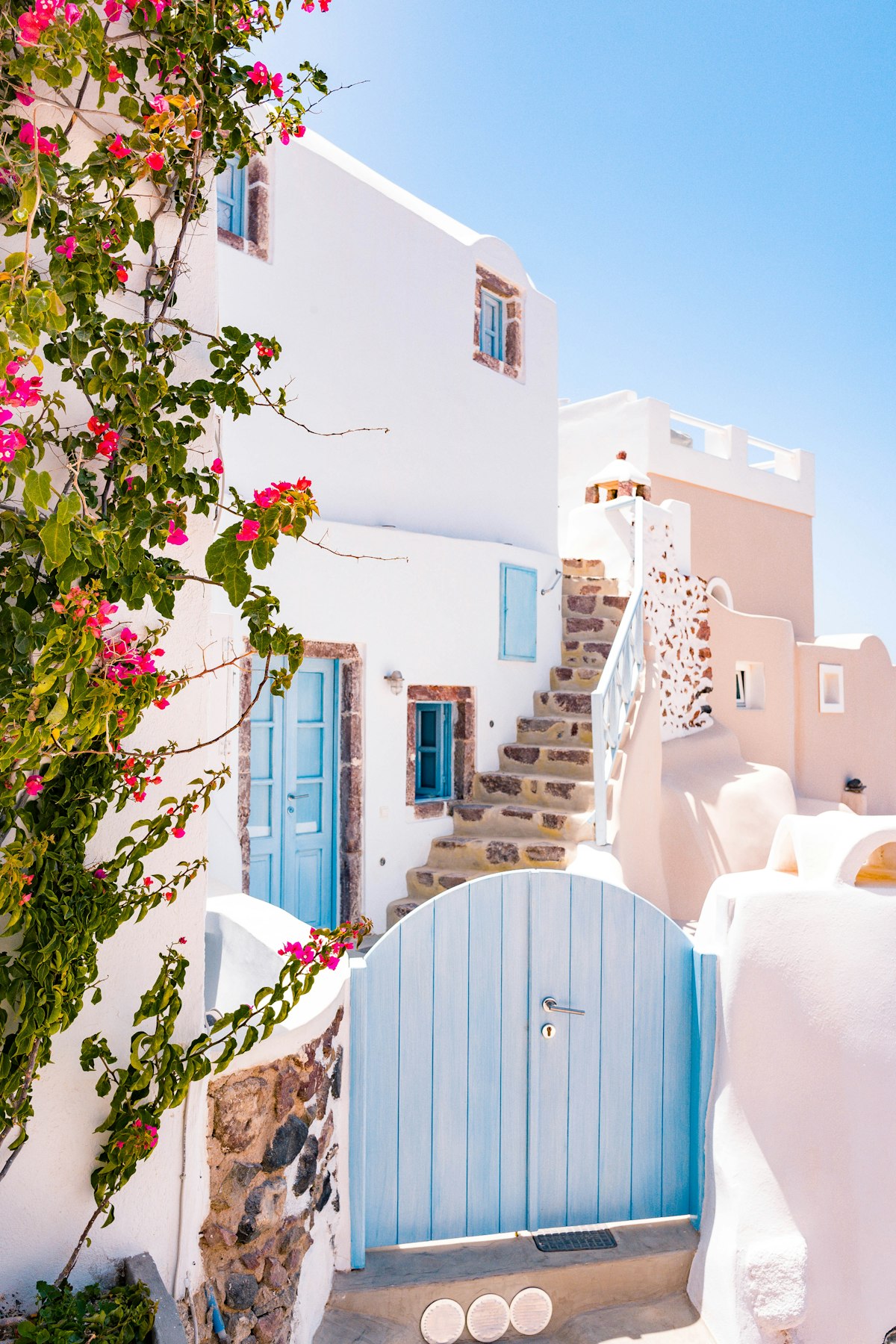
At the far eastern extremity of the French Riviera, where the Alps Maritime plunge into the Mediterranean with a geological abruptness that creates the Côte d'Azur's most sheltered microclimate, Menton occupies a position that is as much Italian as it is French. This is a town that was Genoese until 1346, Monegasque until 1848, Sardinian for a decade, and definitively French only since 1861 — a layered identity that expresses itself in the baroque extravagance of its churches, the ochre and terracotta warmth of its facades, the basilico and focaccia rhythm of its cuisine, and the citrus groves that have defined its agricultural and aesthetic identity for five centuries. Menton is, by any measure, the Riviera's most authentically Mediterranean town — and its emergence as a serious luxury address represents one of the coast's most compelling investment narratives.
The Microclimate Advantage
Menton's luxury proposition begins, quite literally, with temperature. Sheltered to the north and east by an amphitheatre of mountains that rise to 1,000 metres within three kilometres of the coast, the town records the highest average temperatures on the French Mediterranean — 2 to 3°C warmer than Nice, 4°C warmer than Marseille, with frost events so rare that they are noted in municipal records as anomalies. This microclimate has produced a botanical reality that is visible the moment one crosses the border from Monaco: gardens that sustain species — Mexican palms, South African proteas, Australian eucalyptus, tropical citrus — that cannot survive anywhere else on the European mainland.
For the luxury property market, this microclimate translates into a measurably longer outdoor season and a garden potential that is functionally subtropical. Properties with south-facing terraces in Menton's old town or along the Garavan coast deliver usable outdoor living from February through November — a nine-month season that compresses the ROI calculus for both residential and short-term rental investors. The buyer who chooses Menton over Cannes or Antibes is purchasing an additional sixty days of al fresco living per year, a differential that compounds over ownership tenure into a lifestyle advantage that is genuinely difficult to price.
The Cocteau Legacy
Jean Cocteau's relationship with Menton — which spanned the last two decades of his life and produced some of his most significant decorative works — has bequeathed the town a cultural infrastructure that punches dramatically above its weight class. The Musée Jean Cocteau – Collection Séverin Wunderman, designed by Rudy Ricciotti and opened in 2011, is a brutalist-modernist gem that houses 1,800 works and has been described by the Financial Times as "the most architecturally ambitious small museum on the Mediterranean." The Salle des Mariages in the Hôtel de Ville, decorated entirely by Cocteau in 1957-58 with murals depicting the fishermen's legend of Orpheus and Eurydice, remains the most sought-after civil wedding venue on the Côte d'Azur.
Cocteau's legacy accomplishes for Menton what no marketing budget could: it associates the town with a specific register of French cultural prestige — artistic, intellectual, gently bohemian — that distinguishes it from the commercial glamour of Cannes or the institutional gravitas of Nice. The buyer who is drawn to Menton is frequently a buyer who has tired of the Riviera's more performative addresses and is seeking a town that values creative substance over social spectacle. This buyer is older, wealthier, and more patient — a demographic that stabilises property values and reduces speculative volatility.
The Lemon Festival and the Citrus Economy
The Fête du Citron — Menton's annual lemon festival, held each February — is a spectacle of surpassing strangeness: enormous sculptures constructed entirely from citrus fruits, paraded through the Jardins Biovès to crowds that now number 240,000 over the festival's two-week duration. Beyond its carnivalesque appeal, the festival is the public face of an agricultural heritage that shapes Menton's identity more profoundly than any architectural monument. The Menton lemon — a specific cultivar, larger and less acidic than its Sicilian or Spanish counterparts — carries an IGP (Indication Géographique Protégée) designation and commands €8-12 per kilogramme at Menton's covered market, making it one of the most expensive citrus fruits in the world.
For the luxury market, the citrus economy provides Menton with a narrative of terroir that resonates powerfully with a buyer demographic increasingly attuned to provenance, craft, and agricultural authenticity. Properties that include functioning citrus groves — even modest ones of 20-30 trees — command premiums of 20-30% over equivalent land without. The lemon, in Menton, is not merely a fruit; it is a brand, a territorial claim, and a living connection to a landscape that has been cultivated, not merely inhabited, for half a millennium.
Garavan: The Hidden Riviera
The Garavan neighbourhood — Menton's easternmost residential quarter, extending from the old port to the Italian border — represents what may be the last significant concentration of undervalued seafront real estate on the French Riviera. This narrow coastal strip, backed by terraced gardens and accessed by winding roads that discourage casual traffic, contains a collection of Belle Époque and Art Deco villas that rival anything in Cap-Ferrat or Roquebrune — at prices that reflect Menton's historically quiet market rather than its actual architectural quality.
A villa in Garavan with 200 square metres of living space, a mature Mediterranean garden, and direct sea access currently transacts in the range of €2.5-4 million. A comparable property in Cap-Ferrat would command €15-25 million; in Beaulieu-sur-Mer, €6-10 million. This differential is not a function of quality — Garavan's villas are architecturally equivalent and often better maintained — but of market perception. Menton has long been perceived as the Riviera's retirement coast, a reputation formed in the Victorian era when British and Russian consumptives were sent to its shores for the curative climate. That perception is changing, driven by a younger generation of Franco-Italian buyers who value Garavan's authenticity, its proximity to the Italian Riviera's restaurants, and its complete absence of the social machinery that makes Cannes and Saint-Tropez so exhausting.
The Italian Connection
Menton's position — three kilometres from the Italian border, twelve minutes by car from Ventimiglia, forty-five minutes from San Remo — creates a cross-border lifestyle proposition that no other Riviera town can match. The Friday market in Ventimiglia, one of Liguria's largest, provides produce at prices 40-60% below French equivalents. The trattorias of Dolceacqua, a medieval village fifteen minutes into the Italian hinterland, serve Rossese wine and rabbit with Taggiasca olives at €30 per head — a fraction of the cost of equivalent dining in Menton itself.
This Italian proximity is not merely a cost advantage; it is a lifestyle texture that enriches daily existence in a way that no amount of luxury infrastructure can replicate. The Menton resident who drives to Bordighera for an espresso, buys flowers at the Ventimiglia market, and returns via the corniche with a boot full of Ligurian olive oil is living a version of Mediterranean life that is more integrated, more varied, and more genuinely cross-cultural than anything available further west on the coast. It is this quotidian richness, as much as any property metric, that is driving Menton's emergence as the Riviera address for buyers who have graduated from glamour to substance.
The Investment Horizon
Menton's investment thesis rests on convergence: the gradual closing of the price gap between Menton and the Riviera's established luxury markets. Over the past five years, Menton's premium segment (properties above €2 million) has appreciated at 8.7% annually — outperforming Nice (6.2%), Cannes (5.8%), and Antibes (6.5%). This outperformance is driven by supply constraints (Menton's topography limits new construction more severely than any other Riviera commune), improving transport infrastructure (the new tramway connecting Menton to Nice via Monaco is scheduled for 2029), and a demographic shift that is introducing younger, more international buyers to a market previously dominated by French retirees.
The risk, as always, is patience. Menton is not a market for the speculative buyer seeking rapid capital appreciation. It is a market for the buyer who understands that the Riviera's most enduring addresses — Cap-Ferrat, Roquebrune, the Cap d'Antibes — were all, at some point in their history, considered secondary to the coast's more fashionable destinations. Menton's moment of transition from charming to essential is underway. The lemon, as any Mentonnais will tell you, takes three years to ripen properly. Some investments require similar discipline.
Explore more from the Latitudes network:
- Monaco Latitudes — Sovereign luxury on the Mediterranean
- Dubai Latitudes — The Emirates' luxury intelligence
- Latitudes Media — The global luxury intelligence hub