Grasse: How the World's Perfume Capital Became the French Riviera's Most Olfactorily Exquisite Luxury Address
March 27, 2026 · 15 min read
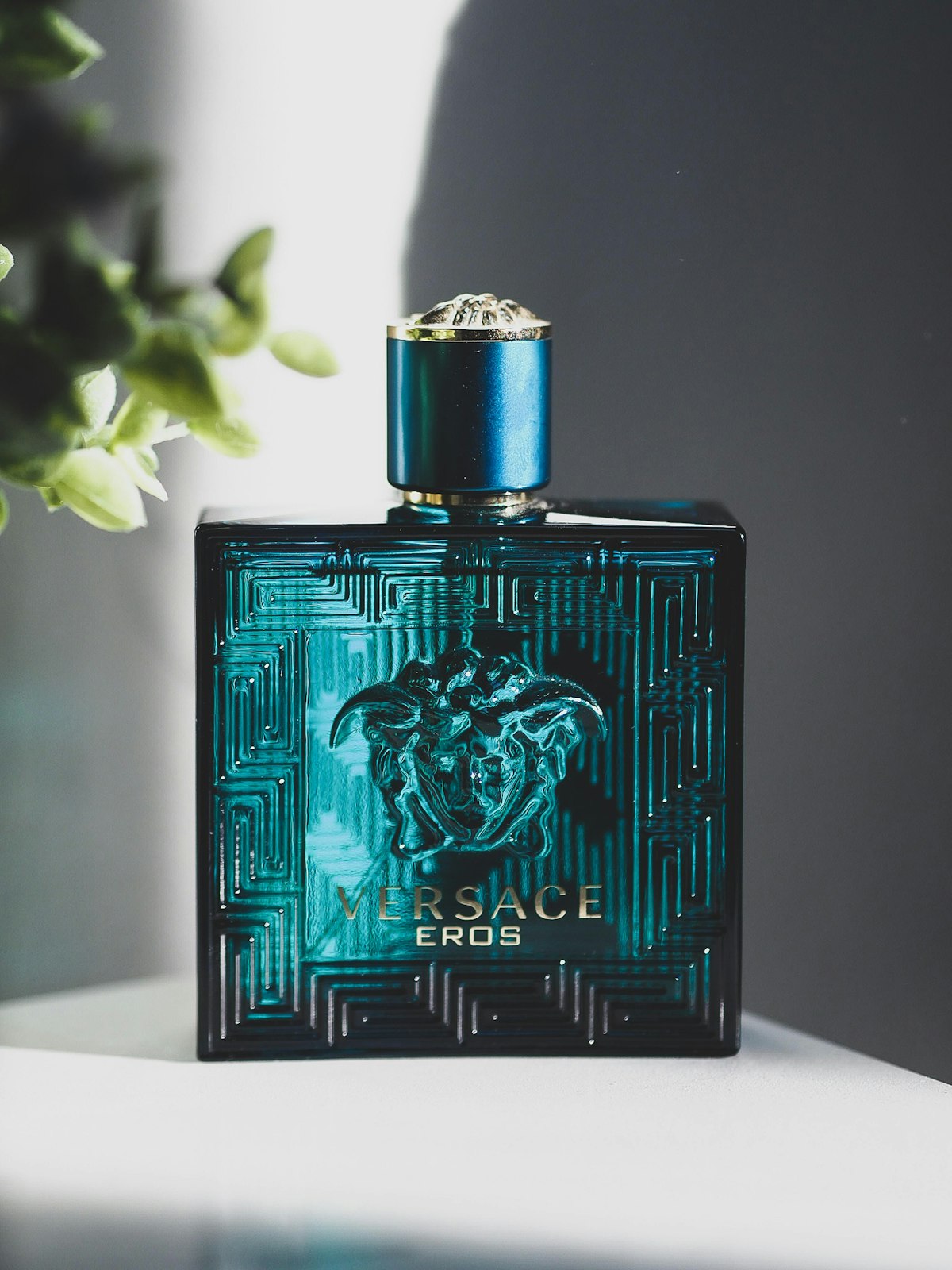
Grasse announces itself before you see it. Driving north from Cannes on the sinuous D6185, climbing through the limestone landscape that separates the coastal Riviera from the pre-Alpine hinterland, there is a moment — usually around Mouans-Sartoux, where the road begins its final ascent — when the air changes. It acquires a density, a botanical complexity, that is unmistakable to anyone who has spent time in perfume country. Rose centifolia and jasmine grandiflorum in May and June, bitter orange blossom in April, tuberose in August, mimosa in January and February. The flowers rotate, but the olfactory saturation is constant. This is not countryside that happens to smell pleasant. This is countryside that has been engineered, over four centuries, to produce the raw materials of the world's most sophisticated sensory art form.
The Tannery Pivot
Grasse's perfume story begins, improbably, with leather. In the sixteenth century, the town was a centre of the tanning trade — a malodorous industry that generated significant wealth but rendered the town itself nearly uninhabitable during the summer months. The tanners' solution was characteristically Provençal: rather than address the smell at its source, they masked it. Perfumed gloves became the town's secondary trade, and when Catherine de Medici — herself obsessed with fragrance — helped popularise scented accessories at the French court, Grasse's tanners discovered that they could earn more from the perfume than from the leather.
By the seventeenth century, the pivot was complete. The tanneries closed or converted. The fields around Grasse — blessed with a microclimate of warm days, cool nights, limestone soil, and the Mistral wind that keeps humidity low enough to prevent flower-rotting — were replanted with the aromatic crops that the new industry demanded. Galimard, the oldest of Grasse's parfumeries, was founded in 1747. Molinard followed in 1849. Fragonard in 1926. Each generation of parfumeurs refined the techniques of extraction — enfleurage, steam distillation, later solvent extraction — that transformed Grasse's flowers into the concentrated absolutes that anchored the world's finest fragrances.
The Fields That Feed Paris
The relationship between Grasse and the global luxury fragrance industry is best understood through a single number: it takes approximately 8,000 jasmine flowers — hand-picked at dawn, before the sun volatilises the essential oils — to produce one gram of jasmine absolute. One gram. A standard fine fragrance contains between 0.5% and 3% jasmine absolute by volume. The mathematics of this equation explain both the price of great perfume and the economics of Grasse's flower fields: they are, in effect, outdoor factories operating at extraction efficiencies that would horrify any industrial engineer but that produce outputs of a quality that no synthetic process has yet replicated.
Chanel understood this before anyone else in the luxury industry. In 2000, the house acquired the Domaine de Pégomas — five hectares of rose and jasmine fields just south of Grasse — to secure its supply of the May rose and jasmine absolute used in No. 5 and its descendants. The acquisition was derided at the time as a marketing gesture: surely, the sceptics argued, a global house could source its raw materials more efficiently elsewhere. But Chanel was making a calculation that has since proven prescient. As climate change destabilised traditional growing regions, as urbanisation encroached on agricultural land throughout the Riviera hinterland, and as the global demand for natural fragrance ingredients surged (driven by the "clean beauty" movement), Grasse's flower fields became what they had always been in practice but never in explicit economic theory: scarce assets. Chanel's five hectares are now estimated to be worth more per square metre than residential land in Monaco.
UNESCO and the Architecture of Preservation
In 2018, the "perfume-related know-how in Pays de Grasse" was inscribed on UNESCO's Representative List of the Intangible Cultural Heritage of Humanity. The inscription recognised three distinct competencies: the cultivation of perfume plants, the knowledge and processing of natural raw materials, and the art of perfume composition. It was the first time that UNESCO had honoured a complete productive chain — from soil to bottle — as a unified cultural heritage, and it had the immediate effect of transforming the regulatory environment around Grasse's remaining flower fields.
The Communauté d'Agglomération du Pays de Grasse, which governs the town and its surrounding communes, responded to the UNESCO inscription by designating 400 hectares of agricultural land as a "Zone de Protection du Patrimoine Olfactif" — a legally protected olfactory heritage zone in which residential or commercial construction is permanently prohibited. The designation was unprecedented in French planning law and required the creation of an entirely new legal category. It also had the effect of freezing the land supply within and around Grasse, ensuring that any future development would occur within the existing built footprint and driving property values in the medieval centre — already elevated by the town's cultural cachet — to levels that now rival those of comparable hilltop villages on the coastal side of the massif.
The New Luxury Residents
Grasse's residential market has undergone a quiet revolution in the past five years. The traditional buyer profile — retired French couples, occasional British expats, a handful of Scandinavian artists — has been supplemented by a cohort that the local agents describe, with characteristic Provençal understatement, as "la nouvelle clientèle": UHNW individuals from the Gulf, Northern Europe, and North America who are seeking a Riviera address that offers the climate and connectivity of the coast without the density, noise, and social exposure of Cannes, Antibes, or Saint-Jean-Cap-Ferrat.
The appeal is straightforward. Grasse sits at 350 metres altitude, which translates to temperatures 3-5°C cooler than the coast in summer — a non-trivial advantage when August temperatures in Cannes push 35°C. The town is 20 minutes from Cannes, 40 minutes from Nice airport, and reachable from Monaco in under an hour via the A8 autoroute. The medieval centre — a labyrinth of stone-paved lanes, shaded squares, and buildings that date to the twelfth century — has been progressively restored over the past decade, with several former parfumerie buildings converted into residential properties of extraordinary character: double-height stone-vaulted living spaces, rooftop terraces with views from the Alps to the Îles de Lérins, cellars that still smell faintly of rose absolute.
Prices reflect both the scarcity and the moment. A fully restored townhouse in the old centre — three bedrooms, terrace, parking — now trades between €1.2 million and €2.5 million. Bastides on the surrounding hills — the traditional country houses of the Provençal bourgeoisie, typically four to six bedrooms with pool and grounds — range from €3 million to €12 million depending on acreage and view. These prices represent a 60-80% premium over equivalent properties in comparable but less culturally distinguished hilltop villages, and they are accelerating: transaction volumes in 2025 were up 40% year-on-year, with the average price per square metre in the old centre increasing by 22%.
The Bespoke Fragrance Economy
Grasse's most compelling luxury offering is not a property or a hotel room; it is an experience that cannot be replicated anywhere else on earth. Several of the town's remaining independent parfumeries — notably the Musée International de la Parfumerie and the ateliers associated with Galimard and Molinard — offer bespoke fragrance creation workshops led by maîtres-parfumeurs whose training typically spans decades. These are not the 90-minute "create your own cologne" experiences marketed to cruise-ship tourists (though those exist too, and they fund the serious work). The premium programmes — two to three days, priced between €5,000 and €15,000 — involve a genuine creative collaboration between client and perfumer: a scent profile interview, raw material education, iterative formulation, and the creation of a unique fragrance that is registered exclusively to the client and can be reordered indefinitely.
For a certain calibre of luxury consumer — the person who has the watch, the car, the house, the art collection — a bespoke fragrance represents the final frontier of personalisation: a luxury product that is literally invisible, that announces itself only in proximity, and that cannot be purchased by anyone else regardless of their wealth. It is the anti-logo, the anti-status symbol, the ultimate expression of the philosophical position that true luxury is not about displaying wealth but about inhabiting a sensory world that is entirely and irrevocably one's own. Grasse, with its four centuries of olfactory expertise and its fields of flowers that exist nowhere else in quite this concentration or quality, is the only place on earth where this proposition can be fully realised.
The Future Smells Different
Grasse stands at an inflection point. The forces that have sustained its perfume industry for four centuries — climate, soil, tradition, expertise — are now augmented by forces that its founders could not have imagined: UNESCO protection, UHNW residential demand, the global premiumisation of natural ingredients, and a cultural moment that values artisanal authenticity over industrial efficiency. The town's challenge is to grow without destroying the very qualities that make it valuable: the intimacy, the quiet, the fields of flowers that turn the air into a living substance.
Early indications suggest that Grasse is navigating this challenge with intelligence. The protected olfactory heritage zones ensure that the fields survive. The altitude-limited infrastructure — no coast road, no marina, no convention centre — imposes a natural ceiling on visitor density. The perfume houses, which have survived everything from the French Revolution to the synthetic chemistry revolution of the 1950s, continue to adapt without abandoning their essential character. And the new residents, drawn by precisely the qualities that mass tourism would destroy, have a vested interest in maintaining the town's discreet equilibrium.
In the end, Grasse's luxury proposition is elemental: it is a place where the air itself is the product. No other address on the Riviera — no matter how exclusive its postcode, how impressive its marina, how illustrious its hotel — can make that claim. The perfume capital smells, as it has always smelled, of flowers and stone and time. And time, in Grasse, is measured not in market cycles or tourist seasons but in harvests: rose in May, jasmine in August, mimosa in February. An annual rhythm that has continued, unbroken, since the tanners first discovered that there was more money in flowers than in leather.
Published by Latitudes Media · Riviera Latitudes