Opio: How the Grasse Countryside's Most Discreet Olive Estate Village Became the French Riviera's Most Privately Pastoral Luxury Address
March 30, 2026 · 14 min read
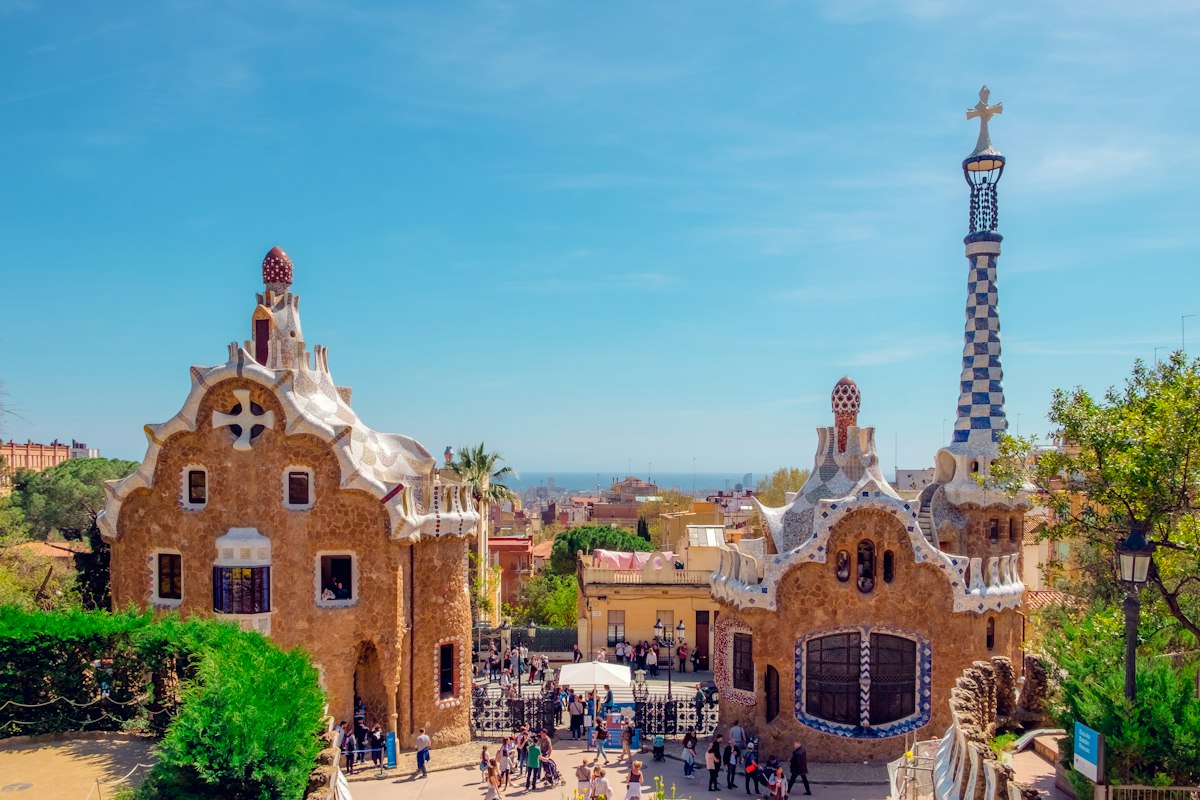
The French Riviera's most celebrated addresses — Cap-Ferrat, Cap d'Antibes, the Croisette — share a common orientation: they face the sea, and they know they are being watched. But fifteen minutes inland from Cannes, in the fragrant hills between Grasse and Valbonne, there exists a parallel Riviera that operates by entirely different principles. Opio — a commune of fewer than 2,200 residents spread across olive-terraced hillsides, pine forests, and discreetly gated estates — represents the Côte d'Azur's most convincing argument that true luxury begins precisely where the sea disappears from view and the sound of cicadas replaces the sound of superyacht engines.
The Olive Heritage
Opio's identity is inseparable from the olive tree. The commune's groves — some containing trees that are demonstrably five hundred years old, their trunks twisted into sculptures that no contemporary artist could improve upon — produce an olive oil of such delicacy that it carries its own appellation within the AOC Olive de Nice designation. The Moulin d'Opio, the village's cooperative mill, processes the annual harvest using methods that have changed only in the details since the seventeenth century, and the resulting oil — green-gold, peppery, with a finish of fresh almond — is among the most sought-after in Provence.
For luxury residents, the olive groves are not merely a picturesque backdrop but a functional element of the property ecosystem. Many of the larger estates — bastides and mas of 400-800 square metres on parcels of one to five hectares — include productive olive groves as integral features, and the annual harvest in November has become a social ritual that connects international owners to the agricultural calendar in a way that a seafront terrace never could. To produce your own oil from trees that predate the French Revolution is a form of luxury that transcends the merely monetary.
The Club de Cannes at Opio
The presence of the Club de Cannes golf course — an eighteen-hole championship layout designed within the natural contours of the Opio landscape — has been a significant factor in the commune's luxury positioning since the 1960s. The course, threading through umbrella pines and ancient olives with views toward the pre-Alpine peaks of the Baou de Saint-Jeannet and the Mercantour massif, offers a playing experience of a quality that coastal Riviera courses, constrained by development pressure and flat terrain, cannot match. The surrounding residential development — low-density villas on large, planted parcels — established the template for Opio's luxury residential character: generous, green, and invisible from the road.
More recently, the Château de la Bégude, a seventeenth-century bastide converted to a boutique hotel and restaurant adjacent to the golf course, has added a hospitality layer to Opio's offering that bridges the gap between private estate living and the kind of curated service infrastructure that international luxury buyers expect. The restaurant's terrace, overlooking the eighteenth hole with the Grasse hills beyond, may be the Riviera's most civilised lunch venue that nobody outside the immediate community knows about.
The Property Landscape
Opio's real estate market is characterised by a scarcity that is structural rather than cyclical. The commune's Plan Local d'Urbanisme imposes strict constraints on new construction, particularly on agricultural and forested land, which means that the supply of luxury properties is effectively fixed. The premium segment operates between €3M and €8M for bastides and contemporary villas of 350-700 square metres on parcels of 5,000 to 20,000 square metres, with exceptional properties — those combining historical architecture, mature grounds, pool, tennis, and complete privacy — occasionally exceeding €10M.
The buyer profile is distinctive: these are families and individuals who have chosen the Riviera for its climate and connectivity but who have no interest in the exhibitionism of the coastal strip. European industrialists, technology entrepreneurs who work remotely, and diplomatic families stationed in Nice or Monaco compose a community that values discretion as a non-negotiable criterion. In Opio, the most expensive properties are those you cannot see from any public road — a principle that inverts the coastal logic of visibility and display.
The Perfume Capital Connection
Opio's proximity to Grasse — the world capital of perfumery, five minutes distant — provides an additional layer of cultural and sensory identity. The jasmine fields, rose gardens, and lavender terraces that supply the great perfume houses create a landscape of cultivated fragrance that permeates the entire region during flowering season. For residents of Opio, this means that the ambient atmosphere of their daily environment carries notes that Parisian perfumers spend fortunes attempting to capture in bottles — a form of olfactory luxury that is literally in the air.
The recent revival of artisanal perfumery in Grasse — led by houses like Galimard, Molinard, and newer operations that emphasise natural ingredients and transparent sourcing — has created opportunities for bespoke perfume creation experiences that complement the luxury residential offer. Several Opio residents maintain private accounts with Grasse perfumers, commissioning signature scents that draw on the specific botanicals of their own estate gardens — a degree of personalisation that connects the world of haute parfumerie to the micro-terroir of individual properties.
The Daily Rhythm
What distinguishes Opio from other Riviera luxury addresses is the quality of daily life at the granular level. The morning begins not with the Mediterranean glare but with the dappled light filtering through pine and olive canopy. The village centre — a miniature square with fountain, boulangerie, and café — provides the essential social infrastructure without the tourism pressure that has transformed comparable villages like Saint-Paul-de-Vence and Mougins into permanent exhibitions. The twice-weekly market in nearby Valbonne offers the Provençal produce circuit — the socca vendor, the chèvre farmer, the lavender honey merchant — within a ten-minute drive.
Cannes is twenty minutes. Nice airport is thirty-five. Monaco is fifty. The beaches of the Croisette and Juan-les-Pins are accessible for a spontaneous afternoon, yet the return journey — climbing back into the fragrant hills as the coastal heat dissipates — reinforces the psychological architecture of Opio's appeal: the coast is available but not necessary, the city is proximate but not intrusive, and the primary experience of home is one of space, silence, and the deep green of Mediterranean vegetation undisturbed by the twenty-first century's appetite for spectacle.
The Verdict
Opio represents the French Riviera's best-kept residential secret — a commune where five-hundred-year-old olive trees, championship golf, Provençal gastronomy, and absolute privacy converge at price points that, while substantial, remain a fraction of equivalent coastal properties. For buyers who understand that the Riviera's greatest luxury is not the view of the sea but the ability to live within a landscape of extraordinary beauty and sensory richness without being seen, Opio is not an alternative to the coast. It is the coast's correction — the place where the Riviera remembers that it was, before it was famous, simply one of the most beautiful corners of the Mediterranean world.
Published by Riviera Latitudes · Part of the Latitudes Media network