Nice: How the Promenade des Anglais Became the Mediterranean's Most Cinematically Celebrated Luxury Boulevard
March 27, 2026 · 14 min read
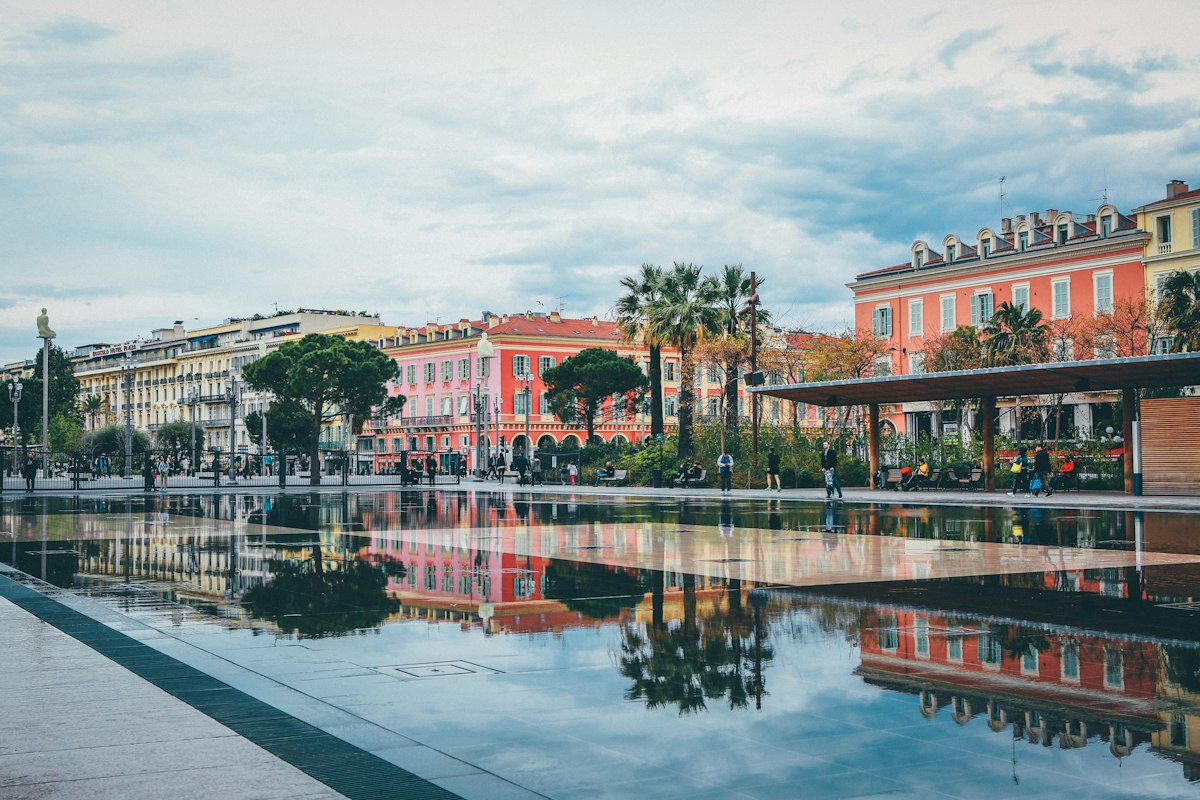
There are seafront promenades across every Mediterranean coastline, yet only one has achieved the status of a global proper noun — a place whose name alone evokes a specific quality of light, a particular relationship between architecture and shoreline, an entire mythology of leisure elevated to art. The Promenade des Anglais is not merely Nice's most famous address; it is the foundational text of Riviera luxury, the seven-kilometre stage upon which the modern idea of the coastal holiday was invented, performed, and eventually exported to every warm-water destination on earth.
The English Invention
The promenade owes its existence to a typically British combination of philanthropy and self-interest. In the winter of 1820, an unusually harsh season drove an influx of English aristocrats to Nice — then part of the Kingdom of Sardinia — seeking the mild climate that had attracted the English gentry since Tobias Smollett's enthusiastic letters of the 1760s. Finding the coastal path inadequate for their constitutionals, the English community funded the construction of a proper walkway along the Baie des Anges, creating in the process both a public amenity and a social stage.
The promenade's subsequent expansion from a modest two-metre path to a grand boulevard of forty metres reflected Nice's transformation from a quiet fishing town into the winter capital of European aristocracy. By the 1860s, when Savoy and Nice were ceded to France, the promenade was already lined with the palatial hotels — the Westminster, the West End, the Excelsior Régina — that would define its architectural character for the next century and a half. Queen Victoria herself took up residence at the Régina in 1897, cementing Nice's status as the Riviera's unofficial capital.
The Architecture of Grandeur
The Promenade des Anglais is bracketed by two buildings that encapsulate the evolution of luxury architecture across a century. At the western end, the Hôtel Negresco — opened in 1913 by Romanian hotelier Henri Negresco — represents the apotheosis of Belle Époque hospitality: its pink dome, modelled on the Salon Ovale at the Hôtel de la Marine in Paris, its Baccarat chandelier commissioned by Tsar Nicholas II, its Salon Royal with the largest Aubusson carpet ever woven. The Negresco has never belonged to a chain. Its independence — maintained through a succession of dedicated owners culminating in the legendary Jeanne Augier, who ran it for half a century — is inseparable from its identity.
At the eastern end, the Musée d'Art Moderne et d'Art Contemporain (MAMAC) represents the cultural ambitions of late-twentieth-century Nice. Its four marble-clad towers, connected by transparent walkways, house one of France's most significant collections of postwar art, with particular strength in Nouveau Réalisme — the movement born in Nice through the work of Yves Klein, Arman, and Martial Raysse. Klein's monochrome blue paintings, created in his Nice studio, have become inseparable from the city's identity: International Klein Blue, the ultramarine pigment he patented, echoes the precise tonality of the Baie des Anges on a cloudless afternoon.
Vieux Nice and the Colline du Château
Behind the promenade, the Italianate labyrinth of Vieux Nice constitutes one of the Mediterranean's most intact historic quarters — a compact maze of ochre and terracotta buildings whose narrow streets open unexpectedly into baroque churches, market squares, and the Cours Saleya flower market, which has operated continuously since the eighteenth century. The quarter's architecture tells the story of Nice's complex identity: more Ligurian than Provençal, more baroque than classical, reflecting four centuries of Savoyard rule that left Nice culturally closer to Turin than to Marseille.
Above Vieux Nice, the Colline du Château — the limestone promontory where Greek colonists founded Nikaia in the fourth century BC — offers the defining panoramic view of the city. Though the castle that gave it its name was demolished on Louis XIV's orders in 1706, the hill's terraced gardens and waterfall provide a contemplative retreat that frames the Baie des Anges in a view so perfectly composed it appears engineered. From this vantage, the geometric sweep of the promenade, the pastel façades of the old town, and the azure arc of the bay resolve into a single image that has launched ten thousand postcards and remains, stubbornly, more beautiful in person.
The Gastronomic Capital
Nice's cuisine occupies a unique position in French gastronomy — a Niçois tradition that draws as much from Liguria and Piedmont as from Provence. Socca, the chickpea-flour crêpe cooked on copper plates in wood-fired ovens, is available from street vendors in Vieux Nice whose techniques have remained unchanged for generations. Pissaladière, the onion and anchovy tart that predates pizza, and salade niçoise — whose authentic composition remains a subject of passionate local debate — represent a culinary tradition that is emphatically democratic, rooted in market ingredients rather than restaurant pretension.
At the elevated end, Nice's gastronomic scene has flourished with the city's cultural renaissance. The arrival of two Michelin-starred establishments along and near the promenade has confirmed Nice's status as a serious dining destination, while the Cours Saleya market — with its daily offerings of local vegetables, flowers, and the small purple artichokes that are a Niçois obsession — provides the raw materials for a cuisine that bridges the vernacular and the refined with unusual grace.
UNESCO and the New Nice
In 2021, Nice's inscription on the UNESCO World Heritage List as a "Winter Resort Town of the Riviera" marked the formal recognition of what the city's admirers had long understood: that Nice is not merely a beautiful Mediterranean city but a culturally significant artefact — the place where the modern tourism industry was invented, where the idea of the coastal holiday as a form of civilised leisure was first codified, and where the relationship between climate, architecture, and social ritual was elevated into an urban art form.
The UNESCO inscription has catalysed a new wave of investment in the promenade's architectural heritage. The Hôtel Atlantic, a Belle Époque landmark that had fallen into disrepair, is being restored as a luxury residence. The former Palais de la Méditerranée, whose Art Deco façade survived a controversial demolition in the 1990s, now houses the Hyatt Regency — its white concrete screen a ghost of the jazz-age glamour that once made the building the Riviera's most glamorous casino. These restorations reflect an understanding that the promenade's value lies not in novelty but in the layered accumulation of architectural memory.
The Light of the Masters
Henri Matisse arrived in Nice in 1917 and remained, with interruptions, for the rest of his life. The quality of light he found — more stable than Paris, more complex than the tropics, filtered through the particular atmospheric conditions created by the Baie des Anges and the surrounding Alpine foothills — became the medium through which he produced some of the twentieth century's most important paintings. His apartment on the Place Charles Félix in Vieux Nice, overlooking the Cours Saleya, provided the interiors — the patterned wallpapers, the open windows, the odalisques — that became his most recognisable subjects.
Matisse was neither the first nor the last artist to be captured by Nice's light. Auguste Renoir spent his final years in nearby Cagnes-sur-Mer; Marc Chagall donated an entire collection of his biblical paintings to a museum built specifically for them on the Cimiez hill; and the photographers of the postwar period — from Jacques Henri Lartigue to Helmut Newton, who died in the city in 2004 — found in Nice a quality of illumination that seemed designed for their medium. To walk the promenade at the hour when the late-afternoon sun turns the façades of Vieux Nice into a study in warm geometry is to understand why they stayed.
The Enduring Stage
The Promenade des Anglais endures because it resolves, with apparent effortlessness, the central tension of luxury urbanism: how to create a public space that is simultaneously democratic and exclusive, accessible and aspirational, ancient in spirit and contemporary in use. The jogger at dawn, the elderly couple on the blue chairs that are the promenade's most enduring design element, the guests emerging from the Negresco in evening dress — all share the same seven kilometres of waterfront, the same view of the same bay, the same light that Matisse spent a lifetime trying to capture.
In a Mediterranean increasingly defined by overdevelopment and mass tourism, Nice's promenade represents something increasingly rare: a luxury that is spatial rather than material, experiential rather than transactional. The blue chairs are free. The view is free. The light is free. What costs — what has always cost — is the privilege of living within daily reach of them. This is the lesson the Promenade des Anglais has been teaching since 1820, and it remains, two centuries later, the most elegant articulation of coastal luxury the Mediterranean has produced.
Part of the Latitudes Media network