Le Lavandou: How the Var's Most Authentically Mediterranean Fishing Port Became the Îles d'Or Coast's Most Quietly Compelling Luxury Address
April 1, 2026 · 11 min read
Le Lavandou occupies a peculiar and enviable position on the French Riviera's hierarchy of desirability. It is not famous in the way that Saint-Tropez is famous — no mythology of celebrity and excess has attached itself to its harbour. It is not architecturally distinguished in the way that Menton or Villefranche-sur-Mer are distinguished — no Belle Époque palace hotels line its waterfront. Yet among those who know the Var coast intimately — the families who have spent decades exploring every cove between Toulon and Fréjus, the yacht owners who have anchored in every bay from the Calanques to the Esterel — Le Lavandou is increasingly cited as the stretch of coastline where the Riviera's essential qualities survive in their purest form: crystalline water, Provençal authenticity, a pace of life calibrated to pleasure rather than performance, and a relationship with the sea that remains genuinely functional rather than purely decorative.
Twelve Beaches, Twelve Characters
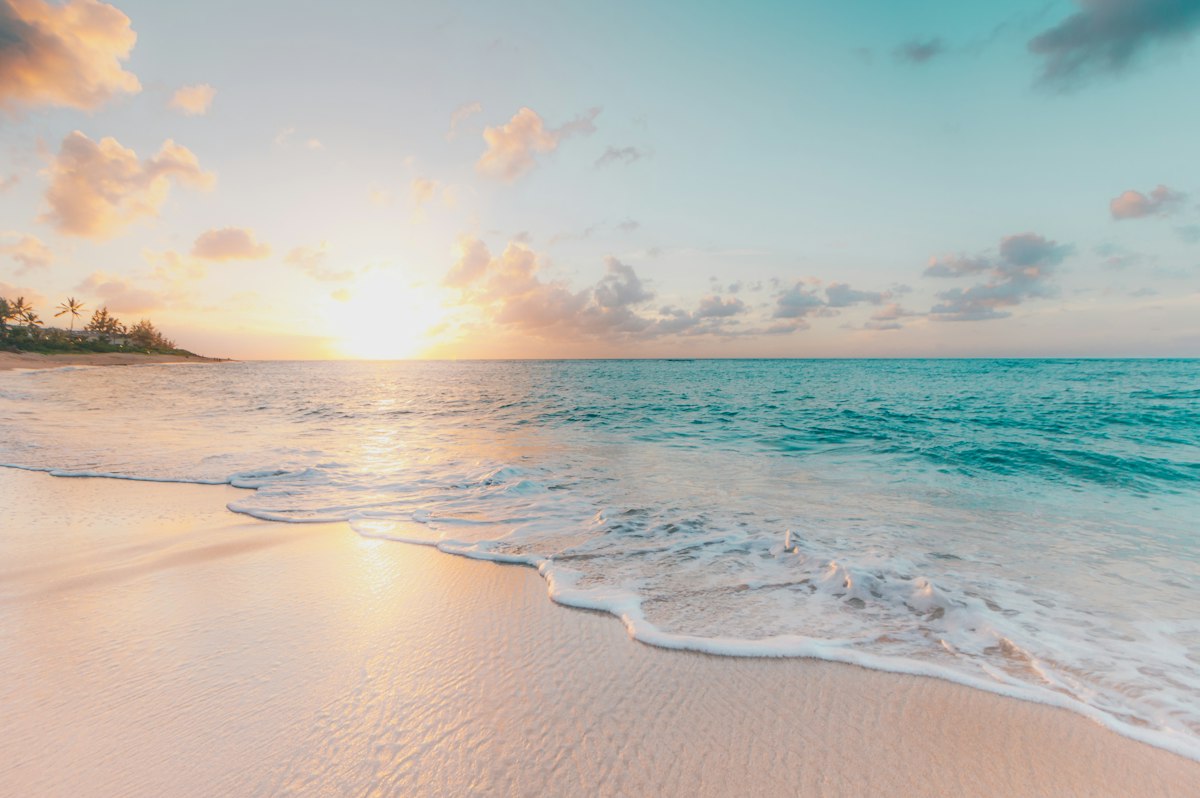
Le Lavandou's most immediately compelling attribute is its twelve beaches — more than any other commune on the Var coast — each with a distinct character, orientation, and constituency. The Plage de la Grande extends from the old port in a gentle arc of fine sand, backed by the town's seafront restaurants and the morning market; it is where families gather, where the fishermen's boats are hauled, where Le Lavandou is most recognisably itself. Eastward, the beaches become progressively wilder: Saint-Clair, with its shallow turquoise water and the pine-covered headland that separates it from the town; La Fossette, tucked into a miniature bay beneath the corniche road; Aiguebelle, where sandstone cliffs frame a cove of almost Caribbean clarity; and the Plage de l'Éléphant, named for a rock formation visible only from the sea, accessible by a footpath that discourages all but the determined. The westward beaches — Jean Blanc, Rossignol, the Plage du Layet — are backed by the Domaine du Layet parkland, offering the rare coastal experience of swimming beneath mature Aleppo pines whose shade reaches to the water's edge. This variety is not merely recreational; it means that residents and visitors can choose their beach according to wind direction, season, mood, and desired level of solitude, a luxury of options that the single-beach communes along the coast cannot match.
The Golden Islands Gateway
Le Lavandou's harbour serves as the principal embarkation point for the Îles d'Or — the three golden islands of Porquerolles, Port-Cros, and Le Levant — and this proximity to France's most ecologically pristine marine territory elevates the town from a pleasant coastal address to a genuine gateway. Port-Cros, a national park since 1963, offers some of the Mediterranean's finest snorkelling along its underwater trail; Porquerolles, with its Caribbean-grade beaches and vineyard-covered interior, provides a car-free day-trip experience that feels less like coastal France than a Cycladic island transposed to Provençal latitudes. The ferry crossing takes thirty minutes to Port-Cros, forty-five to Porquerolles — close enough that residents of Le Lavandou treat the islands as extensions of their own coastline, accessible for a morning swim or an afternoon hike with the same ease that residents of other Riviera towns visit neighbouring communes. This relationship with the islands — proprietary yet respectful, frequent yet never casual — is central to Le Lavandou's identity and its emerging luxury positioning: it is the mainland address from which the Mediterranean's most protected waters are most conveniently reached.
The Fishing Heritage
Le Lavandou's old port retains a working fleet of small fishing boats — pointus and barquettes painted in the traditional Provençal palette of blues, greens, and whites — whose daily catch supplies the town's restaurants and market. This is not a preserved-in-amber heritage tableau; it is an active commercial operation, with fishermen setting nets for rouget, daurade, and loup de mer in the same waters they have fished for generations. The morning fish market on the Quai Gabriel Péri, where the catch is sold directly from the boats, represents a transaction chain — sea to table — of a brevity that has vanished from almost every other Riviera port. For the private chef serving a villa dinner in the hills above Le Lavandou, the ability to purchase fish that was swimming two hours earlier is not a convenience but a culinary advantage that no amount of supply-chain sophistication can replicate. The town's signature dish, the bouillabaisse du Lavandou — less famous than Marseille's version but prepared with a freshness of ingredients that purists argue makes it superior — is the edible expression of this unbroken connection between harbour and kitchen.
The Hillside Villas
Le Lavandou's luxury real estate market is concentrated in the hillside quartiers above the town — particularly the sectors of Saint-Clair, Cavalière, and the slopes of Mont des Oiseaux — where villas built among the pines command panoramic views across the bay to the Îles d'Or. The architectural register ranges from traditional Provençal mas, with their terracotta roofs and stone walls softened by decades of wisteria and jasmine, to contemporary volumes in concrete and glass that exploit the gradient to create multi-level outdoor living spaces cascading toward the sea. What these properties share, regardless of style, is an orientation toward the islands: the sight of Porquerolles and Port-Cros floating on the horizon, their profiles shifting with the light from dawn gold to afternoon blue to sunset rose, is the defining visual experience of living above Le Lavandou, and the one that most consistently converts visitors into buyers. Current values — between €8,000 and €15,000 per square metre for premium sea-view properties — represent a significant discount to equivalent addresses in Saint-Tropez or Cap d'Antibes, a differential that the market is gradually correcting as Le Lavandou's reputation consolidates among informed buyers.
The Quiet Luxury Proposition
Le Lavandou's appeal is, in the final analysis, an appeal to subtraction. It is what the Riviera becomes when you remove the celebrity culture, the mega-yacht posturing, the velvet-rope restaurants, and the social performance that makes certain stretches of the coast feel like stages rather than places. What remains — clean water, good food, functioning harbours, pine-shaded paths, island views, the unhurried rhythm of a town that still wakes to the sound of fishing boats rather than construction cranes — is not the absence of luxury but its essence. For a growing category of buyer — wealthy enough to live anywhere on the Riviera, discriminating enough to choose the coast that has not yet consumed itself — Le Lavandou represents what Saint-Tropez was before Bardot, what Ramatuelle was before the beach clubs, what the entire Var coast was before the twentieth century decided it was valuable. Whether it can retain that character as its reputation grows is the question that every new arrival simultaneously asks and, by arriving, makes more difficult to answer. For now, Le Lavandou remains the Riviera's most convincing argument that luxury and authenticity are not, after all, incompatible.