Le Lavandou: How the French Riviera's Twelve-Beach Town Became the Var Coast's Most Authentically Mediterranean Luxury Address
March 27, 2026 · 12 min read
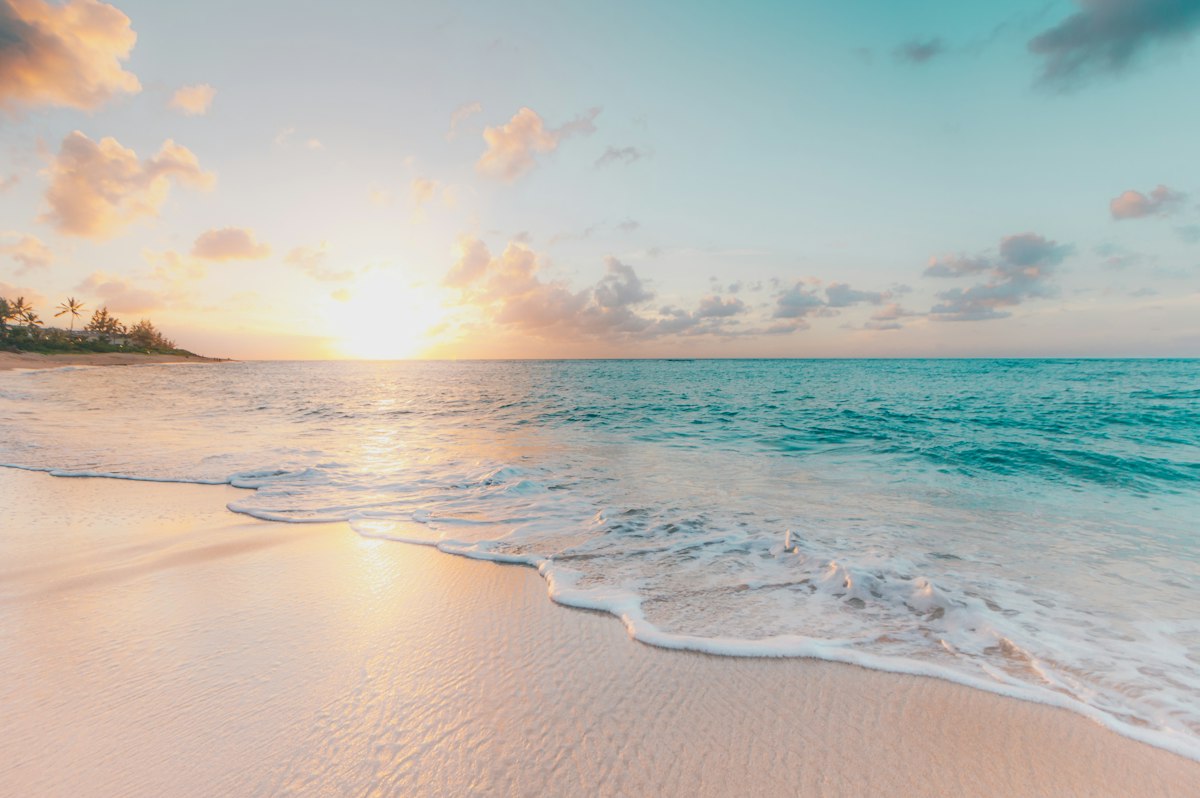
The name is disputed — whether it derives from lavande (the lavender that once carpeted the surrounding hillsides) or lavoir (the communal washhouse near the harbour) or some older, pre-French root lost to etymology — but the effect is not. Le Lavandou, a fishing town of approximately 6,000 permanent residents on the Var coast between Toulon and Saint-Tropez, possesses a quality that the greater Riviera has spent the better part of a century systematically destroying in pursuit of glamour: authenticity. The harbour is still a working harbour, where blue-painted pointu boats land their catch each morning. The twelve beaches — a number that the tourist office promotes with justified pride — range from broad sandy crescents to hidden rocky coves accessible only on foot. The Îles d'Hyères — Porquerolles, Port-Cros, Le Levant — float on the horizon like a promise of paradise at a distance of twenty minutes by ferry. And the town itself, arranged along a gentle hillside between the sea and the dark green mass of the Maures mountains, maintains the scale and rhythm of a Provençal settlement that has not been redesigned for visitors but has simply, graciously, made room for them.
The Twelve Beaches: A Coastal Anthology
Le Lavandou's twelve beaches — strung along twelve kilometres of coastline from the Plage du Lavandou in the west to the Plage de Pramousquier in the east — constitute a kind of anthology of Mediterranean beach types. Each has a distinct character, microclimate, and constituency. The Plage de la Grande, the town beach, is the most accessible: a generous crescent of fine sand facing south, sheltered by the harbour breakwater, with views across the water to the Île du Levant. The Plage de Saint-Clair, just to the east, is perhaps the most beautiful: a protected cove of exceptional clarity, backed by maritime pines, with a gentleness of surf and a luminosity of water that has attracted painters since the early twentieth century.
Moving further east, the beaches become progressively wilder. The Plage de l'Éléphant (named for a rock formation that, from certain angles, suggests a pachyderm drinking from the sea) is a small, rocky cove reached by a steep path through maquis scrubland. The Plage de Jean Blanc — white sand, crystalline water, backed by a cliff of startling geological drama — achieves a beauty so intense that arriving there, after the ten-minute walk from the coastal path, produces a physical sensation of relief, as if the body itself recognises that it has found a place of absolute rightness. And the Plage de Pramousquier, at the commune's eastern extremity, is the most substantial of the outlying beaches: a broad, pine-shaded crescent with views down the coast toward Cap Bénat and the open Mediterranean beyond.
The Harbour: A Working Waterfront
The harbour of Le Lavandou — a compact basin accommodating fishing boats, pleasure craft, and the ferries to the Îles d'Hyères — is the town's social and architectural centre. Unlike the gentrified marinas of the eastern Riviera, where restaurants and luxury boutiques have replaced chandleries and net-repair workshops, Le Lavandou's port retains a working character that gives the waterfront its essential vitality. The morning fish market, held on the quayside when the boats return, offers the catch of the day — rascasse, rouget, loup de mer, poulpe — direct from the fishermen who landed it, at prices and with a freshness that no restaurant, however nearby, can quite replicate.
The quayside restaurants, which line the southern edge of the harbour, serve bouillabaisse and bourride that benefit from this proximity to source. The bouillabaisse at Chez Mimi — a harbourside institution whose terrace tables overlook the fishing boats — follows the traditional Provençal method with a rigour that the more touristic establishments of Marseille and Cassis have largely abandoned: the rouille made from scratch, the croutons rubbed with garlic, the fish served separately from the broth, the whole composed with a seriousness of intention that elevates a fisherman's stew to a culinary ritual.
The Îles d'Or: Paradise at Ferry Distance
Le Lavandou's position as the principal ferry port for the Îles d'Hyères — the Golden Islands, so named for the golden mica that glitters in their rocks at sunset — transforms the town from a pleasant coastal settlement into a gateway to what is, by broad consensus, the most beautiful island group in metropolitan France. Porquerolles, the largest and most accessible of the three, offers a landscape that visitors consistently compare to the Caribbean: white sand beaches (the Plage Notre-Dame was voted the most beautiful beach in Europe), turquoise water of startling clarity, and a car-free interior of pine forest, vineyards, and olive groves that can be explored by bicycle in a day of unhurried pleasure.
Port-Cros, the smallest and most protected — the entire island and its surrounding waters constitute the oldest marine national park in Europe — offers a more austere beauty: steep paths through dense Mediterranean maquis, underwater snorkelling trails through posidonia meadows teeming with marine life, and a quietude so complete that the sound of a cicada, heard from the terrace of the island's only hotel, achieves the quality of an event. The Île du Levant, two-thirds of which is occupied by a military installation, is known for its naturist colony, Héliopolis, established in 1931 — a fact that adds a characteristically French note of libertarian eccentricity to the archipelago's otherwise conventional beauty.
The Maures: Wild Mountains at the Door
Behind Le Lavandou rises the Massif des Maures — the oldest geological formation on the Côte d'Azur, a range of dark schist mountains covered in dense cork oak, chestnut, and maritime pine forest that has resisted the development pressures that have transformed so much of the Riviera's hinterland. The Maures (the name derives from the Provençal mauro, meaning dark, referring to the dense vegetation, not from the Moors) offers walking, cycling, and driving experiences of exceptional quality: narrow roads winding through villages — Bormes-les-Mimosas, La Londe, Collobrières — that have maintained their Provençal character with a tenacity that the coastal towns have not always matched.
Collobrières, the "capital of the Maures," is famous for its chestnuts — the Confiserie Azuréenne, founded in 1884, produces marrons glacés of extraordinary quality — and for its position at the heart of a forest landscape that, in autumn, when the chestnuts are harvested and the cork oaks are stripped of their bark, achieves a beauty of such quiet intensity that it serves as a corrective to the Riviera's dominant aesthetic of sea and sun. The relationship between Le Lavandou and the Maures — coast and mountain, blue and green, maritime and sylvan — creates a dual-landscape proposition of unusual richness.
The Artists' Legacy
Le Lavandou's artistic heritage, while less celebrated than those of Saint-Paul-de-Vence or Antibes, is genuine and significant. The Neo-Impressionist painter Théo van Rysselberghe settled in the hamlet of Saint-Clair in 1910 and spent his final decade painting the coast and the light of Le Lavandou with a pointillist precision that documents the landscape as it appeared before the twentieth century's transformations. Henri-Edmond Cross, another Neo-Impressionist, lived and painted in the neighbouring commune and produced canvases of the coast that vibrate with a colour intensity that the camera cannot capture — the red of the Maures, the blue of the sea, the gold of the sand, all rendered in discrete dots of pigment that the eye assembles into a luminous whole.
The tradition continues: Le Lavandou's galleries — small, independent, concentrated in the streets behind the harbour — show work by contemporary artists who have been drawn to the same light and landscape that captivated the Neo-Impressionists a century ago. The Espace Culturel hosts rotating exhibitions of sufficient quality that the drive from Toulon or Saint-Tropez to attend them is regularly justified.
Getting There & Practical Intelligence
Toulon-Hyères airport (TLN) is the closest gateway, thirty minutes by car. Nice airport (NCE) is ninety minutes east. By TGV, Toulon is the nearest station (forty-five minutes by car or bus to Le Lavandou); direct trains from Paris cover the distance in under four hours. By car, the A57/DN98 route from Toulon is the most direct; the more scenic option follows the DN559 along the coast from Hyères.
The ferry service to the Îles d'Hyères operates year-round from Le Lavandou harbour (Vedettes Îles d'Or), with crossings to Porquerolles (approximately thirty minutes), Port-Cros (forty-five minutes), and Île du Levant (thirty-five minutes). Summer services are frequent; winter services are reduced but sufficient for day trips. The market, held Thursday and Saturday mornings in the Place Ernest Reyer, is one of the finest small markets on the Var coast — Provençal produce, local cheese, lavender products, and the olive oil of the Maures, pressed from olives harvested on the hillsides visible from the market stalls.
Published by Riviera Latitudes · Part of the Latitudes Media network