Juan-les-Pins: How the Riviera's Jazz Capital Became the Côte d'Azur's Most Rhythmically Glamorous Beach Address
March 27, 2026 · 13 min read
Before Juan-les-Pins, the French Riviera was a winter destination. The English, the Russians, and the northern European aristocracy descended upon Nice, Cannes, and Monte-Carlo from November to April, seeking the mild Mediterranean climate as a remedy for the grey afflictions of their native countries. Summer was considered unbearable — the heat, the insects, the social emptiness of a coast abandoned by everyone who mattered. Then, in the early 1920s, a small group of Americans — led by Gerald and Sara Murphy, those luminous figures of the Lost Generation whose parties on the beach at La Garoupe would be immortalised by their friend F. Scott Fitzgerald in Tender Is the Night — discovered that the Riviera in summer was not merely tolerable but magnificent: the sea was warm, the light was golden, the beaches were empty, and the social conventions that governed the winter season could be cheerfully discarded. Juan-les-Pins, the small resort nestled between Antibes and Cap d'Antibes, became the laboratory for this revolution — and its legacy, eight decades later, continues to define the Riviera's most joyous and musical identity.
The Fitzgerald Connection: Inventing Summer
Gerald and Sara Murphy rented the Villa America on the Cap d'Antibes in 1923 and immediately began the work of making summer on the Riviera socially viable. They cleared seaweed from the beach at La Garoupe. They served cocktails at hours that scandalised the few remaining locals. They invited their friends — Fitzgerald, Hemingway, Picasso, Cole Porter, Dorothy Parker — and created, on a stretch of coast that no self-respecting European would have visited in July, a social scene of such glittering intensity that the entire history of the Riviera pivoted around it.
Fitzgerald, who stayed at Juan-les-Pins in 1926 while working on what would become Tender Is the Night, absorbed the Murphy circle into his fiction with such transformative power that the novel, published in 1934, became the founding mythology of the summer Riviera. The opening chapters — Dick and Nicole Diver on their beach, the sun, the sea, the cocktails, the undercurrent of melancholy beneath the glamour — established an image of Juan-les-Pins that persists in the cultural imagination nearly a century later: a place where beauty and sadness coexist, where the party is always magnificent and always, in some essential way, already over.
Jazz à Juan: Under the Pines Since 1960
The Festival International de Jazz d'Antibes Juan-les-Pins — universally known as Jazz à Juan — was founded in 1960, making it one of the oldest jazz festivals in Europe and, alongside Montreux and Newport, one of the three most historically significant in the world. The festival's setting — the Pinède Gould, an open-air amphitheatre set among the Aleppo pines that give Juan-les-Pins its name, with the Mediterranean visible through the trees and audible during the quieter passages — is among the most atmospheric of any music festival anywhere.
The roll call of artists who have performed at Jazz à Juan constitutes a history of the music itself: Louis Armstrong, Miles Davis, Ella Fitzgerald, Dizzy Gillespie, Count Basie, Ray Charles, Nina Simone, Sonny Rollins, Herbie Hancock, Keith Jarrett, Pat Metheny, Wynton Marsalis. The festival's reputation for presenting artists at the peak of their powers — and for capturing those performances in recordings of exceptional audio quality (the acoustic properties of the Pinède, with its pine canopy acting as a natural diffuser, are prized by sound engineers) — has made it a pilgrimage site for jazz devotees worldwide.
The festival atmosphere — ten nights in mid-July, with performances beginning at dusk and continuing past midnight, the air warm and scented with pine resin, the audience a mix of serious jazz aficionados, Riviera holidaymakers, and locals who have been attending for decades — achieves a quality of relaxed intensity that more commercially driven festivals cannot replicate. Jazz à Juan has resisted the temptation to expand beyond jazz, to chase mainstream headliners, or to commercialise the experience beyond what the music requires. The result is a festival that remains true to its founding vision: great jazz, under the pines, by the sea.
Art Deco on the Shore: Architectural Heritage
Juan-les-Pins's development as a summer resort in the 1920s and 1930s coincided precisely with the golden age of Art Deco architecture, and the town preserves a concentration of Deco buildings — hotels, villas, apartment buildings, and the casino (now converted) — that constitutes one of the most coherent Art Deco ensembles on the Riviera. The style's characteristic elements — geometric facades, rounded balconies, porthole windows, decorative ironwork in stylised floral and marine motifs — are adapted here to the specific conditions of the Mediterranean coast: the buildings are oriented to capture sea views, the balconies are sized for outdoor living, and the white render that predominates reflects rather than absorbs the intense southern light.
The Hôtel Belles-Rives — originally the villa in which Fitzgerald stayed in 1926, converted to a hotel in 1929, and now a member of Small Luxury Hotels of the World — is the most celebrated of Juan-les-Pins's Art Deco buildings and the most resonant link between the resort's literary past and its present. The hotel's private jetty extends into the bay; its waterside restaurant serves refined Mediterranean cuisine with the sea literally at the diners' feet; and its rooms — many retaining original Art Deco detailing — offer the experience of sleeping in the building where one of the twentieth century's great novels was conceived. The literary connection is not exploited with the heavy hand of themed décor; it is present as an ambiance, a quality of light and memory that enriches the experience without dominating it.
The Beaches: Pine-Shaded Mediterranean
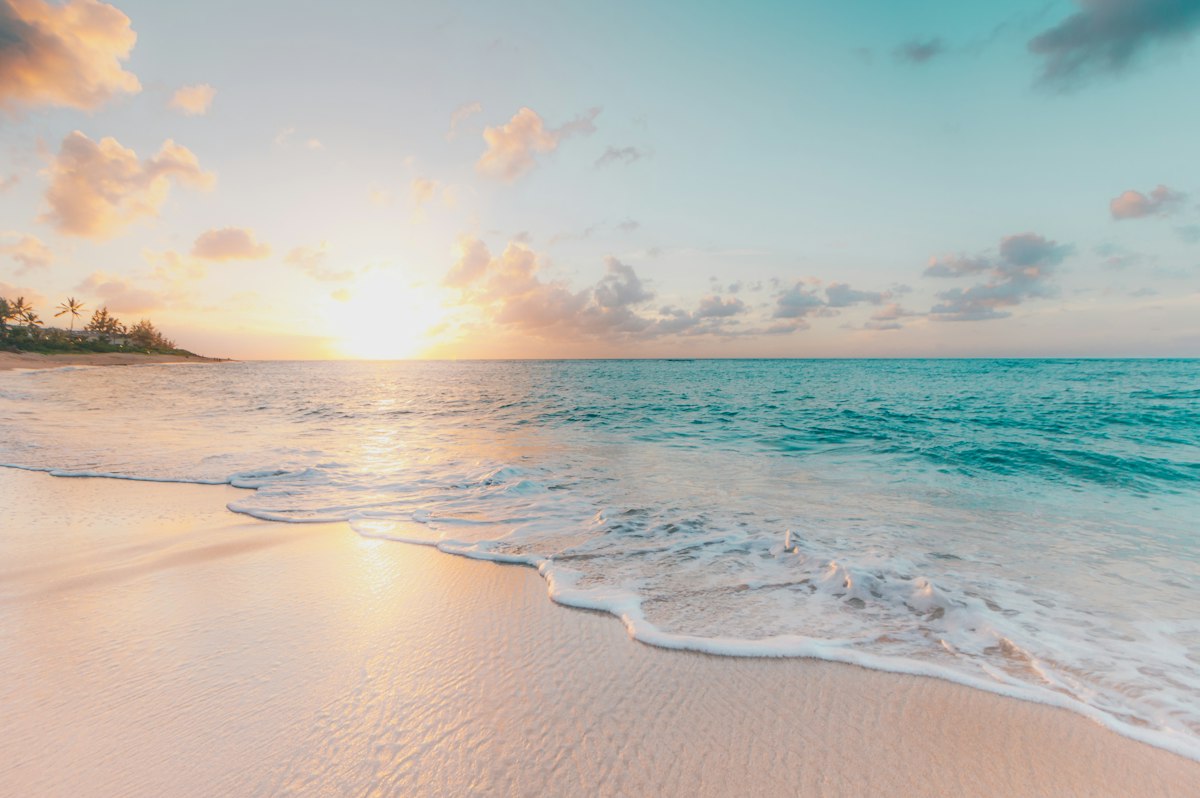
Juan-les-Pins's beaches — a continuous crescent of fine sand extending from the port to the Cap d'Antibes headland — are distinguished from other Riviera beaches by the proximity of the pine forest that gives the resort its name. The Aleppo pines (Pinus halepensis), planted in the nineteenth century to stabilise the sandy terrain, have grown to impressive maturity, their spreading canopies providing natural shade that reduces the need for parasols and creates, along the beach's upper margin, a zone of dappled light that is among the most pleasant microclimates on the coast.
The beach culture at Juan-les-Pins is more relaxed and family-oriented than at neighbouring Cannes, less exclusive than Cap d'Antibes, and more animated than the quieter resorts to the west. The promenade that backs the beach — lined with restaurants, ice cream parlours, and the boutiques that cater to the summer crowd — maintains an atmosphere of unpretentious pleasure that is increasingly rare on the Côte d'Azur, where the pressure toward exclusivity and expense has rendered many resorts inaccessible or joyless. Juan-les-Pins has resisted this pressure, retaining the democratic spirit that the Murphys, for all their wealth, brought to the summer Riviera: the conviction that the beach, the sun, and the sea belong to everyone.
Cap d'Antibes: The Gilded Neighbour
Juan-les-Pins shares the Cap d'Antibes peninsula with one of the most exclusive residential enclaves in the world. The Cap — densely wooded with umbrella pines and occupied by villas whose owners include Russian oligarchs, Middle Eastern royalty, and European industrialists — provides a counterpoint of extreme wealth and privacy to Juan-les-Pins's more accessible pleasures. The Sentier du Littoral, a coastal path that circumnavigates the Cap, offers views of these estates from their seaward side — glimpses of infinity pools, private jetties, and tropical gardens that are visible from the path but permanently inaccessible, creating a tantalising experience of proximity to wealth that is quintessentially Riviera.
The Hôtel du Cap-Eden-Roc, the legendary establishment on the Cap's western shore whose pool — carved into the rock above the sea — has appeared in more films and magazine features than any other swimming pool in the world, is the natural complement to a stay in Juan-les-Pins: lunch at Eden-Roc, followed by an evening at Jazz à Juan, constitutes a day of such varied and concentrated pleasure that it encapsulates the entire Riviera proposition in twelve hours.
Getting There & Practical Intelligence
Nice Côte d'Azur airport is twenty minutes by car or thirty by the regular TER train service that stops at Juan-les-Pins station. Cannes is ten minutes west; Antibes, with its old town and Picasso museum, is a five-minute drive or a twenty-minute walk along the coast. The festival season (mid-July) is the most animated and demanding period — accommodation should be reserved months in advance, and the town achieves a density of nocturnal activity that the quiet months cannot hint at. June and September offer warm seas, uncrowded beaches, and the Art Deco architecture in its best light. Winter, when the promenade is empty and the pines are silhouetted against grey silk skies, has an austere beauty that Fitzgerald would have appreciated.
Published by Riviera Latitudes · Part of the Latitudes Media network