Hyères & the Îles d'Or: How the French Riviera's Golden Islands Became the Mediterranean's Most Unspoiled Luxury Archipelago
March 27, 2026 · 14 min read
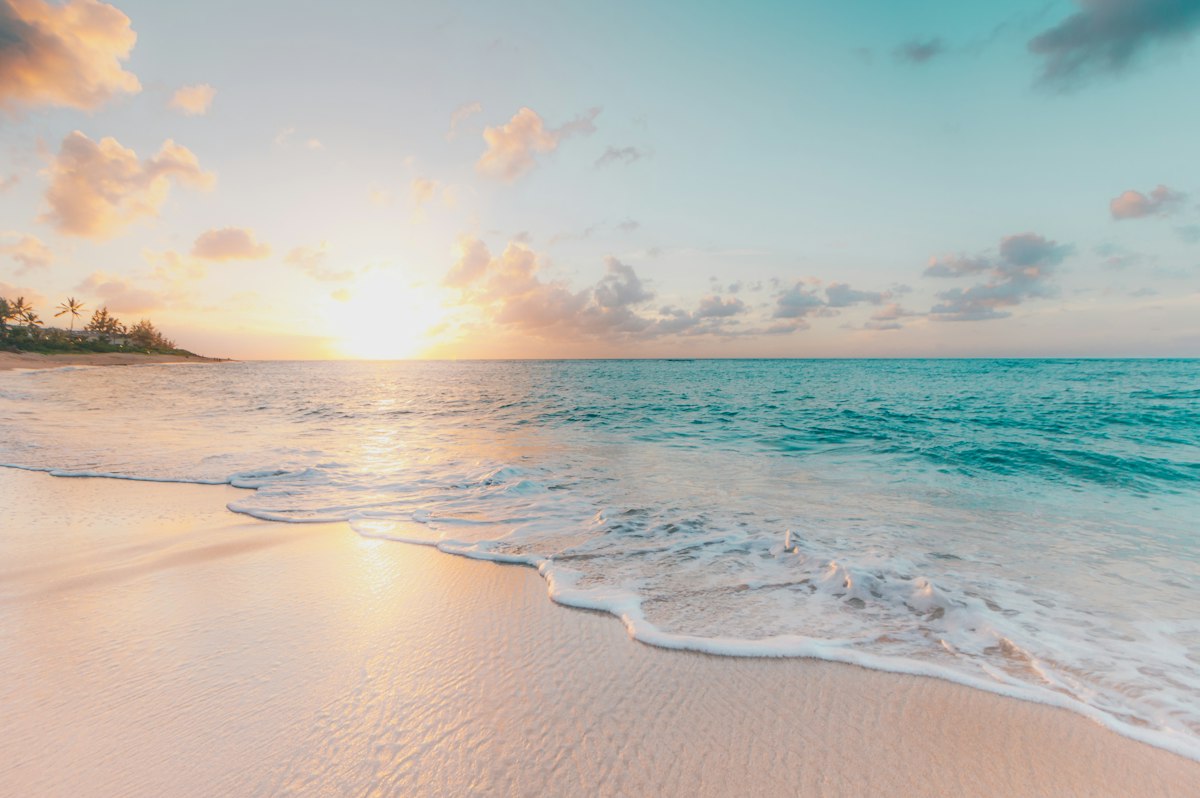
The name tells you what to expect: the Îles d'Or — the Golden Islands — earned their designation from the particular quality of light that strikes their mica-flecked schist cliffs in the afternoon, producing a warm, aureate glow that is visible from the mainland coast at Hyères and that ancient mariners took as a sign of divine favour. The archipelago — Porquerolles, Port-Cros, and the Île du Levant — lies between seven and fifteen kilometres off the southernmost point of the Var department, at the western extremity of the Côte d'Azur, and constitutes what may be the greatest paradox of the French Riviera: three islands of extraordinary natural beauty, located within an hour of Nice and Marseille, that have been preserved in a state of near-pristine wilderness while the rest of the coast has been progressively consumed by development.
Porquerolles: The Island That France Saved
Porquerolles, the largest of the three islands (7.5 kilometres long, 3 kilometres wide), is the one that most visitors know and that best illustrates the Îles d'Or's unique proposition. The island's northern coast — a succession of sandy beaches backed by pine and eucalyptus forests, with water of Caribbean clarity lapping against sand of flour-like fineness — represents the French Mediterranean coast as it existed before the twentieth century: undeveloped, unpolluted, and possessed of a beauty so elemental that it feels less like a destination and more like a recovery of something lost.
The preservation of Porquerolles is the result of a decision that ranks among the most far-sighted acts of environmental policy in European history. In 1971, the French state, acting on the initiative of President Georges Pompidou, acquired approximately 80% of the island from its private owner — a Belgian industrialist named François-Joseph Fournier, who had bought the island in 1912 as a gift to his wife and whose heirs were considering selling to a consortium of hotel developers. The state purchase, which created the core of what is now the Parc National de Port-Cros (extended to include Porquerolles in 2012), ensured that the island's forests, beaches, and agricultural land would remain permanently protected from commercial development.
The result, half a century later, is an island that accommodates visitors (ferries from Hyères carry approximately one million people per year) while preserving an environment of genuine wildness. There are no cars on Porquerolles — bicycles are the primary mode of transport, available for hire at the small village near the port. There are a handful of restaurants and hotels, all of modest scale and restrained character. The beaches — the Plage Notre Dame (voted France's most beautiful beach in a 2015 survey), the Plage d'Argent, the Plage de la Courtade — are accessible only on foot or by bicycle, ensuring that even at the height of summer, a fifteen-minute walk from the village delivers genuine solitude.
Port-Cros: Europe's First Marine Park
Port-Cros, the smallest and most mountainous of the three islands, has been a national park since 1963 — making it the oldest marine and terrestrial national park in Europe. The designation encompasses not only the island itself but the surrounding waters to a distance of 600 metres, creating a protected marine environment of approximately 1,300 hectares in which all forms of fishing, anchoring (except on designated buoys), and disturbance are prohibited. The result, after more than six decades of protection, is a marine ecosystem of extraordinary health and diversity — a living demonstration of what the Mediterranean was before human activity degraded it.
The island is entirely roadless and almost entirely uninhabited: a small settlement near the port — a few houses, a restaurant, a park administration office — constitutes the only built environment. The interior is covered by a dense Mediterranean forest of Aleppo pine, holm oak, and maquis scrub that has not been significantly disturbed for over a century, creating a habitat that supports populations of species — including the rare Hermann's tortoise and the Tyrrhenian painted frog — that have been extirpated from much of the mainland coast.
The underwater trail at La Palud — a marked snorkelling itinerary through posidonia meadows and over rocky formations teeming with grouper, barracuda, moray eels, and clouds of rainbow wrasse — is one of the most celebrated marine experiences in Europe. The trail, designed for swimmers of moderate ability and requiring no equipment beyond a mask and snorkel, follows a series of submerged information panels that identify the species visible at each station. The experience — floating in water of crystalline transparency above a marine landscape of such density and variety that it resembles a tropical reef — has converted generations of visitors to the cause of marine conservation.
Hyères: The Forgotten First Resort
Hyères — the mainland town from which the ferries depart for the islands — holds a distinction that has been almost entirely forgotten: it was the first resort on the French Riviera. Before Nice, before Cannes, before Monte-Carlo, it was Hyères that attracted the British and Russian aristocrats who, in the early nineteenth century, began the tradition of wintering on the Mediterranean coast. Queen Victoria visited. Tolstoy convalesced. Robert Louis Stevenson wrote here. The town's old quarter — a medieval village perché crowned by the ruins of a castle and surrounded by the most extensive collection of Art Deco and Modernist villas on the Riviera — preserves the atmosphere of this earlier, quieter era of Mediterranean tourism.
The Villa Noailles, designed by Robert Mallet-Stevens in 1924-33 for the art patrons Charles and Marie-Laure de Noailles, is the masterpiece of Hyères's architectural heritage and one of the key monuments of early Modernist architecture in France. Now a centre for contemporary art, fashion, and design, the villa hosts an annual festival of architecture and design that draws international professionals and confirms Hyères's position as the Riviera's most intellectually engaged cultural centre. Man Ray filmed the surrealist film Les Mystères du Château de Dé here in 1929; the building's geometric terraces, its cubist garden, and its rooftop swimming pool — among the first private pools on the Riviera — retain the utopian charge of early Modernism at its most optimistic.
The Giens Peninsula: The Double Tombolo
The Presqu'île de Giens — a peninsula connected to the mainland by a rare double tombolo (two parallel sand bars enclosing a saltwater lagoon, the Étang des Pesquiers) — provides the embarkation point for the island ferries and, in its own right, one of the most distinctive landscapes on the French coast. The western tombolo, exposed to the Mistral, supports a wild, wind-blasted vegetation of salt-tolerant species; the eastern tombolo carries the road to Giens village; and between them, the étang — a shallow lagoon that attracts flamingos, avocets, and other wading birds in extraordinary numbers — creates a landscape of such unexpected character that visitors approaching the ferry port often stop, disoriented, convinced they have somehow taken a wrong turn into the Camargue.
The Wine Islands
Porquerolles has been producing wine since the time of the Phocaean Greeks, and the island's three domaines — Domaine de l'Île, Domaine de la Courtade, and Domaine Perzinsky — produce rosés and whites of remarkable freshness and mineral intensity that benefit from the unique terroir of schist soil, maritime influence, and intense Mediterranean sunlight. The wines are produced in small quantities, sold primarily on the island and in Hyères, and rarely exported — making them among the most exclusive bottles on the Riviera. A glass of Domaine de la Courtade rosé, drunk at a table overlooking the port of Porquerolles, with the pine forests rising behind and the Mediterranean spreading before, constitutes one of those simple, perfect gustatory experiences that justifies the entire concept of terroir.
Getting There & Practical Intelligence
Toulon-Hyères airport (TLN) is the nearest airport, fifteen minutes from the ferry terminal at La Tour Fondue on the Giens peninsula. Nice airport is approximately ninety minutes by car. Ferries to Porquerolles depart approximately every thirty minutes in summer (the crossing takes twenty minutes); Port-Cros is served less frequently (approximately one hour crossing). Cars cannot be taken to the islands — arrive on foot or by bicycle.
The optimal season extends from April to October. July and August bring large crowds to Porquerolles (the island has a daily visitor cap in peak season); May-June and September-October offer the best balance of warmth, swimmable water, and tranquillity. Port-Cros, with its more limited ferry service and absence of beaches, remains quieter throughout the season. Accommodation on the islands is extremely limited and books months in advance for summer — the Mas du Langoustier on Porquerolles, a Relais & Châteaux property set in its own estate at the island's western tip, is the most distinguished address and one of the most romantic hotel settings on the entire Riviera.
Published by Riviera Latitudes · Part of the Latitudes Media network