Èze: How the Côte d'Azur's Most Vertiginously Perched Medieval Village Became the French Riviera's Most Timelessly Elevated Luxury Address
March 31, 2026 · 14 min read
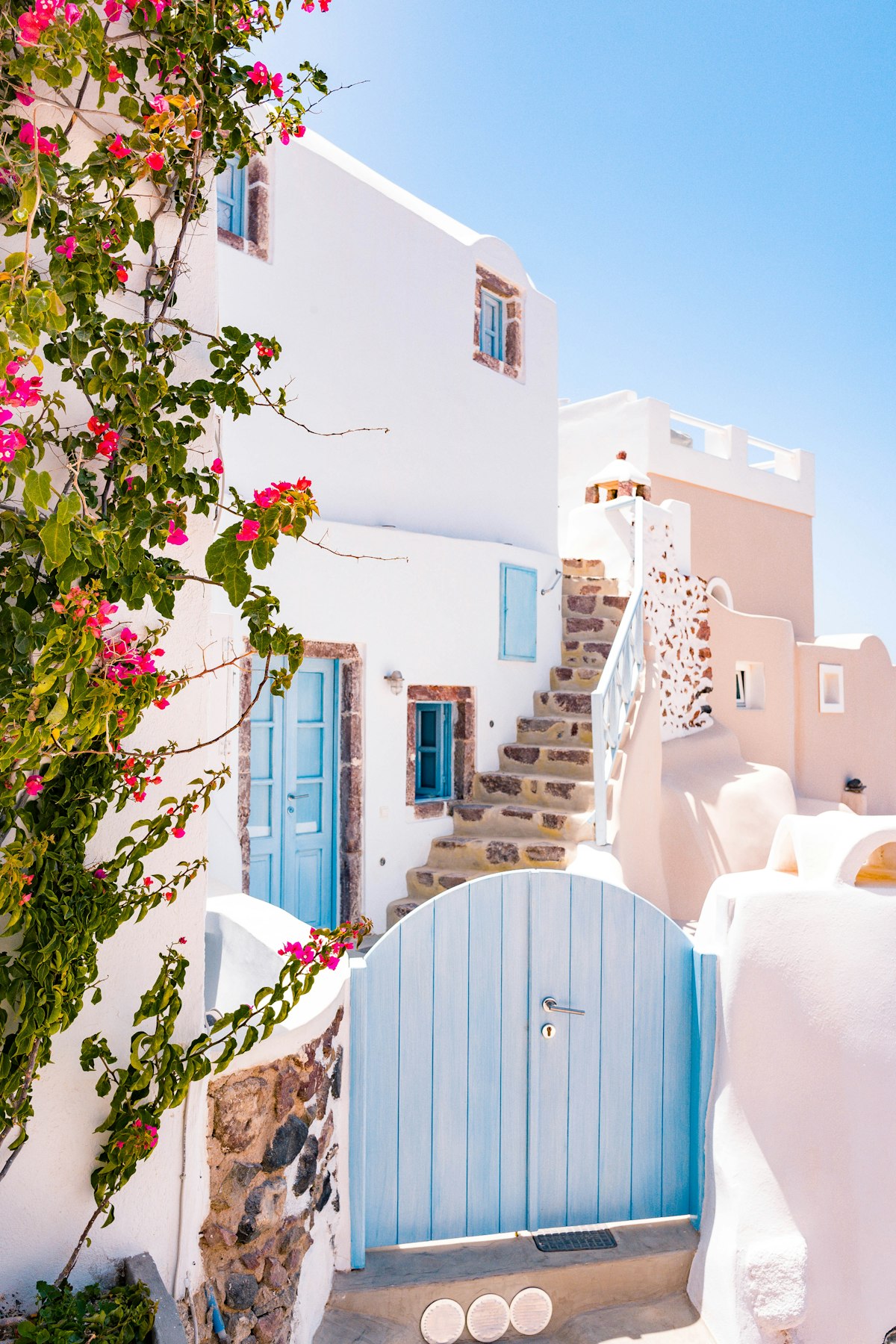
The approach to Èze village is an exercise in progressive revelation that no landscape architect could have designed. The road from the Basse Corniche climbs through switchbacks of increasing tightness, each turn concealing and then revealing a Mediterranean panorama of expanding enormity, until the final hairpin deposits you at a stone gateway beyond which no vehicle can pass. From here, the village must be entered on foot, ascending through cobblestone passages so narrow that two people cannot walk abreast, past walls of golden limestone worn smooth by nine centuries of habitation, until you emerge — breathless, slightly disoriented, profoundly recalibrated — at the summit, 427 metres above a sea that stretches unbroken to the coast of Corsica. This is Èze's fundamental proposition: luxury earned through effort, beauty revealed through ascent.
The Fortified Aesthetic
Èze was built to be impregnable. Founded in the early medieval period as a defensive stronghold controlling the coastal passage between Nice and Monaco, the village's architecture is determined by the logic of siege resistance rather than aesthetic ambition. Walls are thick — two metres of solid limestone at their most substantial. Windows are narrow, positioned to admit light while denying entry. Streets follow no grid; they twist and double back and dead-end in deliberate confusion designed to disorient attackers who breached the outer gates. The village's vertical organisation — houses stacked upon houses, each generation building atop the ruins of the last — creates a three-dimensional density that feels almost geological, as though the village has grown from the rock rather than been placed upon it.
This military architecture, stripped of its original defensive purpose, has acquired an aesthetic power that no contemporary architect could replicate. The narrow passages create shade patterns of extraordinary complexity, cool corridors of shadow that shift throughout the day as the Mediterranean sun traces its arc across the sky. The thick stone walls maintain interior temperatures of remarkable stability — cool in summer, warm in winter — with a passive efficiency that modern insulation technology can only approximate. The irregular rooflines, each building asserting its individuality while conforming to the collective mass, compose a skyline of accidental beauty that makes the planned uniformity of modern luxury developments seem sterile by comparison.
Nietzsche's Path and the Philosophy of Ascent
Friedrich Nietzsche spent several winters in Èze during the 1880s, and it was while climbing the steep path from the sea to the village summit — a trail now bearing his name, the Chemin de Nietzsche — that he reportedly conceived significant portions of Thus Spoke Zarathustra. The connection is not merely anecdotal. The physical experience of ascending from sea level to the village's 427-metre summit — the progressive shortening of breath, the expanding horizon, the sensation of leaving the ordinary world behind — enacts a metaphor so perfectly aligned with Nietzsche's philosophical project that one suspects the ideas and the landscape were co-creators.
The Chemin de Nietzsche remains one of the Riviera's most extraordinary walks: a steep, rocky trail that takes approximately forty-five minutes to ascend and offers, at regular intervals, views that stop you not from exhaustion but from involuntary aesthetic arrest. The trail passes through Mediterranean maquis — thyme, rosemary, wild lavender — whose scent intensifies as the sun heats the hillside, creating an olfactory landscape as rich as the visual one. At the summit, the Jardin Exotique d'Èze, planted with cacti and succulents from five continents, crowns the ruins of the medieval château with a botanical collection that thrives in the unique microclimate created by the elevation, the southern exposure, and the thermal mass of the surrounding stone.
The Perfume Capital Above the Sea
Èze's relationship with perfume is structural rather than incidental. The village sits at the western edge of the Grasse perfume region, and the combination of altitude, coastal humidity, and intense sunlight creates growing conditions for aromatic plants that differ subtly but significantly from those at lower elevations. The Fragonard perfumery maintains its production facility and boutique in the village, and the experience of sampling fragrances at 427 metres — where the clean, mineral air provides a neutral olfactory baseline that sea-level locations cannot match — has become one of the Riviera's most distinctive luxury experiences.
The village's artisanal economy, of which perfume is the most prominent element, represents a luxury model fundamentally opposed to the branded retail corridors of Monaco and Cannes. There are no chain stores in Èze village. The galleries, ateliers, and boutiques that line its narrow streets are individually owned, their inventories reflecting personal taste rather than corporate buying decisions. A ceramicist who has worked in the same stone-vaulted studio for thirty years occupies the space next to a contemporary jeweller whose pieces reference the village's medieval geometry. This curatorial diversity, unplanned but organically curated by the village's physical constraints and its self-selecting population of creative residents, produces a shopping experience of genuine discovery — each doorway potentially opening onto something remarkable.
The Chèvre d'Or: Hospitality at the Edge
Château de la Chèvre d'Or — a collection of medieval houses ingeniously connected and converted into a luxury hotel over the course of six decades — occupies the most dramatic position on the Riviera. Its terraced restaurant, suspended above a 400-metre vertical drop to the Mediterranean, offers a dining experience in which the boundary between interior and exterior, between civilisation and nature, between the cultivated and the wild, dissolves entirely. Eating here at sunset, when the sea turns from blue to gold to copper to violet in a chromatic sequence that takes exactly forty-three minutes, is to understand why the phrase "once in a lifetime" was invented.
The hotel's forty rooms and suites are distributed through the medieval fabric of the village itself, each occupying a different stone building connected by passages that wind through the ancient streets. No two rooms are alike. Some feature barrel-vaulted ceilings dating to the twelfth century; others open onto private terraces with views that encompass the entire sweep of the coast from Cap Ferrat to the Italian border. The experience of staying at la Chèvre d'Or is the experience of inhabiting a village rather than occupying a hotel — of becoming, temporarily, a resident of a community whose history is measured in centuries rather than seasons.
The Three Corniches and the Approach
Èze's position is defined as much by the roads that serve it as by the village itself. The three Corniches — the Basse, Moyenne, and Grande — represent three distinct approaches to the same destination, each offering a fundamentally different experience of the Riviera's coastal geography. The Basse Corniche follows the shoreline, threading through the waterfront towns of Villefranche and Beaulieu with an intimacy that is alternatively charming and claustrophobic. The Moyenne Corniche, carved into the cliff face at mid-height, delivers the most cinematic driving experience on the Côte d'Azur — sweeping curves, dramatic tunnels, and the vertiginous sensation of floating between sea and sky that made it Grace Kelly's preferred route and, tragically, the site of her fatal accident in 1982. The Grande Corniche, following the route of the ancient Roman Via Julia Augusta along the ridge, offers the broadest panoramas and the most profound sense of elevation.
Together, the three Corniches create a transport infrastructure that transforms every journey to and from Èze into an event. There is no mundane approach. Whether ascending from the coast or descending from the Alpine foothills, the driver or passenger is subjected to a landscape of such theatrical intensity that arrival at the village feels less like reaching a destination than completing a performance.
The Eternal Village
Èze endures because its luxury is geological. While the Riviera's coastal resorts reinvent themselves with each generation — tearing down and rebuilding, rebranding and repositioning, chasing trends that will themselves be replaced within a decade — Èze remains what it has been for nine centuries: a village of stone perched improbably above the sea, offering anyone willing to make the climb a perspective on the Mediterranean that renders all other viewpoints provisional. Its restaurants serve food of remarkable quality not because they are chasing Michelin stars but because their kitchens are surrounded by ingredients that grow in volcanic soil four hundred metres above the sea, where the sunlight is more intense, the air is cleaner, and the herbs develop a concentration of flavour that lowland cultivation cannot match.
The village's ultimate luxury is its indifference to luxury. Èze does not try to be exclusive; it simply is, by virtue of its geography, its history, and the physical effort required to reach it. In an era when exclusivity is typically manufactured through pricing, membership, and artificial scarcity, Èze achieves it through the most democratic mechanism imaginable: a steep hill. Anyone may climb it. Most choose not to. Those who do are rewarded with one of the Mediterranean's most extraordinary experiences — a village that has been earning its beauty, stone by stone, century by century, for nine hundred years.
Part of the Riviera Latitudes collection exploring the French Riviera's most exclusive addresses. Discover more at Latitudes Media.