Collobrières: How the Massif des Maures' Chestnut Capital Became the French Riviera's Most Deeply Forested Luxury Secret
March 2026 · 15 min read
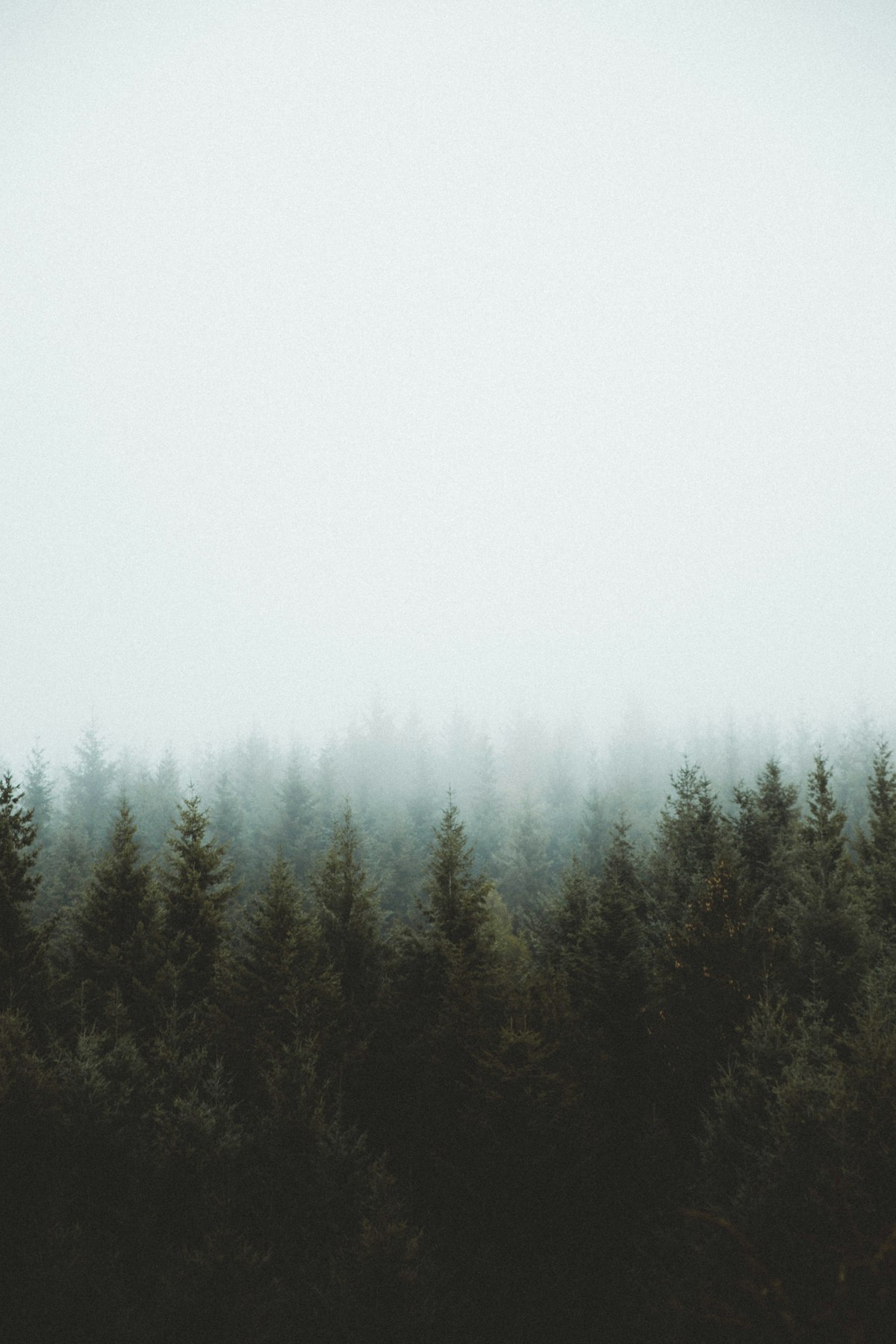
The French Riviera's luxury geography is, by overwhelming consensus, a coastal phenomenon. The sea commands the premium: views of it, proximity to it, the social architecture that organises itself around beaches and harbours and promenades. Thirty minutes inland from Saint-Tropez, however, in the deep green heart of the Massif des Maures, exists a village that proposes an entirely different relationship between landscape and luxury — one founded not on spectacle but on immersion, not on visibility but on disappearance. Collobrières, population 1,900, is the Riviera's invisible village: known to marrons glacés connoisseurs, Carthusian architecture enthusiasts, and a very small number of property buyers who have concluded that the Riviera's most valuable remaining asset is not another sea view but twenty hectares of silence under cork oaks.
The Chestnut Economy
Collobrières' identity has been shaped by the sweet chestnut for at least a thousand years. The Massif des Maures — geologically distinct from the limestone Provence to its north, composed of ancient schist and gneiss that produces the acidic soils chestnuts require — supports one of France's largest concentrations of Castanea sativa, and Collobrières sits at the centre of this forest like a clearing in a vast green room. The village's annual Fête de la Châtaigne, held on the last three Sundays of October, draws 20,000 visitors to a commune that normally contains fewer than 2,000 — a ratio of festival attendance to resident population that no other event in the Var approaches.
The chestnut economy's luxury expression is the marron glacé — a confection whose apparent simplicity conceals a five-day production process of such exacting technical difficulty that France supports fewer than a dozen artisan producers. The Confiserie Azuréenne, operating from premises in the village centre since 1920, produces marrons glacés by hand according to methods that have not changed in a century: selection of the largest chestnuts, initial blanching, fourteen successive baths in syrup of progressively increasing concentration over five days, a final glacéing that produces the characteristic translucent amber shell. At €80 to €120 per kilogram, these confections command prices equivalent to fine chocolate — and, like fine chocolate, they attract a clientele for whom provenance and process constitute the primary value proposition.
The Chartreuse de la Verne
Above Collobrières, at an altitude of 400 metres in the dense forest of the Maures, stands one of the most architecturally astonishing religious buildings in southern France. The Chartreuse de la Verne, founded in 1170 by monks of the Carthusian order, occupies a site of such deliberate inaccessibility — reachable only by a single-track road that winds through twelve kilometres of cork oak forest — that it retains, after 850 years, the atmosphere of withdrawal and contemplation that its founders sought. Twice destroyed by fire, twice rebuilt, the monastery was abandoned during the Revolution, left to ruin for a century, and finally restored beginning in 1968 by a community of Bethlehem nuns who continue to occupy it.
The architectural experience of the Chartreuse is fundamentally one of contrast: the massive serpentine stone walls — built from local green schist that gives the building a dark, almost geological quality — against the precision of Romanesque arches and the luminous austerity of the cloister; the forest pressing against the walls from every side against the architectural clarity within. For the culturally engaged visitor, the Chartreuse provides something increasingly rare on the Riviera: an encounter with beauty that operates entirely outside the vocabulary of leisure, consumption, and display. It is architecture as spiritual practice — and its proximity to Collobrières gives the village a cultural depth that no amount of marina development or boutique hotel investment could manufacture.
The Cork Oak Forest
The Massif des Maures contains France's largest cork oak forest — approximately 6,000 hectares of Quercus suber, a species whose extraordinary capacity to regenerate its bark after harvesting has sustained a commercial industry on these hills since Roman times. The cork harvest, conducted every nine to twelve years per tree by teams of specialist écorceurs who strip the bark by hand using curved axes, continues in the forests around Collobrières as it has for centuries — one of the few remaining examples of a pre-industrial extractive economy operating within sight of the twenty-first century Côte d'Azur.
For the property buyer, the cork oak landscape represents the Maures' most distinctive amenity. These forests — evergreen, aromatic, structurally open (the trees grow spaced, with maquis undergrowth rather than dense canopy) — create a landscape of extraordinary visual and sensory richness. Walking through a cork oak wood in summer, the bark stripped from the lower trunks to reveal cinnamon-red cambium beneath, the air thick with the resinous scent of cistus and tree heather, the light filtered through leaves that remain green through the driest months: this is a landscape experience that has no equivalent on the coastal Riviera, and that an increasing number of luxury buyers — particularly Northern Europeans weary of the Mediterranean's summer harshness — are beginning to prioritise.
The Property Landscape
Collobrières' real estate market operates at price levels that would astonish anyone familiar with the Gulf of Saint-Tropez's coastal values. Village houses of 120 to 200 square metres, renovated with contemporary interiors while preserving the stone walls and terracotta floors of the original construction, trade at €2,500 to €4,000 per square metre. Bastides on the village's periphery — traditional Provençal farmhouses of 200 to 400 square metres, with stone-walled grounds of one to five hectares — command €500,000 to €1.5 million, prices that in Saint-Tropez would purchase a studio apartment with a partial view of someone else's yacht.
The larger estates — properties of 10 to 50 hectares in the Maures forest, comprising a main house, dependencies, chestnut or cork oak woodland, and the total acoustic isolation that only dense forest can provide — represent the Riviera's most undervalued luxury segment. These properties, which surface irregularly on the market and are often sold privately between families, trade at €1 to €4 million: less than the annual mooring fee for a 60-metre yacht in Port de Saint-Tropez. The buyer who acquires such a property obtains not merely a residence but a landscape — a private territory of forest, silence, and geological antiquity that the coastal Riviera, with its compressed geography and competitive density, cannot offer at any price.
The Gastronomic Village
Collobrières supports a culinary culture that reflects its forest identity. The village's restaurants — notably La Petite Fontaine, whose terrace overlooking the Réal Collobrier river has served regional cooking since the 1960s — specialise in the cuisine of the Maures: chestnut flour dishes (gnocchi, cakes, soups), wild boar sourced from the surrounding hills, honey from hives positioned in the maquis, and the village's own olive oil, pressed from the small, slow-maturing olives that grow on the Maures' warmer south-facing slopes.
The Tuesday market, held on the Place de la Libération beneath platanes whose canopy spans the entire square, offers a compressed inventory of the Maures' productive landscape: chestnut cream, cork trivets, honey, goat cheese from the farms above the village, and the seasonal mushrooms — cèpes, chanterelles, pieds de mouton — that the forest produces in extraordinary abundance after the autumn rains. This is not the curated, tourist-oriented market of a coastal commune but a working market where locals buy their week's provisions and where the prices — €6 per kilo for cèpes in October, €3 for a jar of chestnut cream — reflect the village's continued connection to its productive landscape rather than the speculative pricing of the coast.
The Silence Premium
Collobrières' ultimate luxury is acoustic. The village's position deep within the Maures — 25 kilometres from the nearest autoroute, 30 from the coast, surrounded on all sides by forest that absorbs and dampens sound — creates an environment of silence that has become, in the overconnected, over-stimulated landscape of contemporary European leisure, a genuinely scarce commodity. At night, the village achieves a darkness and quietness that urbanised visitors often describe with the same vocabulary they would use for a wilderness: immersive, restorative, almost disorienting in its completeness.
This silence is not emptiness. It is populated by the sounds that silence permits: the river over stones, the Scops owl's metronome call from the cork oaks, wind in chestnut leaves, the distant bell of the village church striking hours into an atmosphere with no competing noise. For the luxury buyer who has achieved everything the coast offers — the view, the yacht, the beach, the restaurant — and who finds that these assets have become, through familiarity, inert, Collobrières proposes something genuinely novel: the luxury of not being where everyone else is, of hearing what the coast's permanent social performance makes inaudible. It is the Riviera's most radical luxury address, and its most peaceful.
Riviera Latitudes provides private intelligence on the Côte d'Azur's most exceptional destinations, luxury real estate and lifestyle. Request access →