Castellar: How the Côte d'Azur's Most Secretly Perched Medieval Village Became the French Riviera's Most Quietly Distinguished Luxury Address
March 31, 2026 · 15 min read
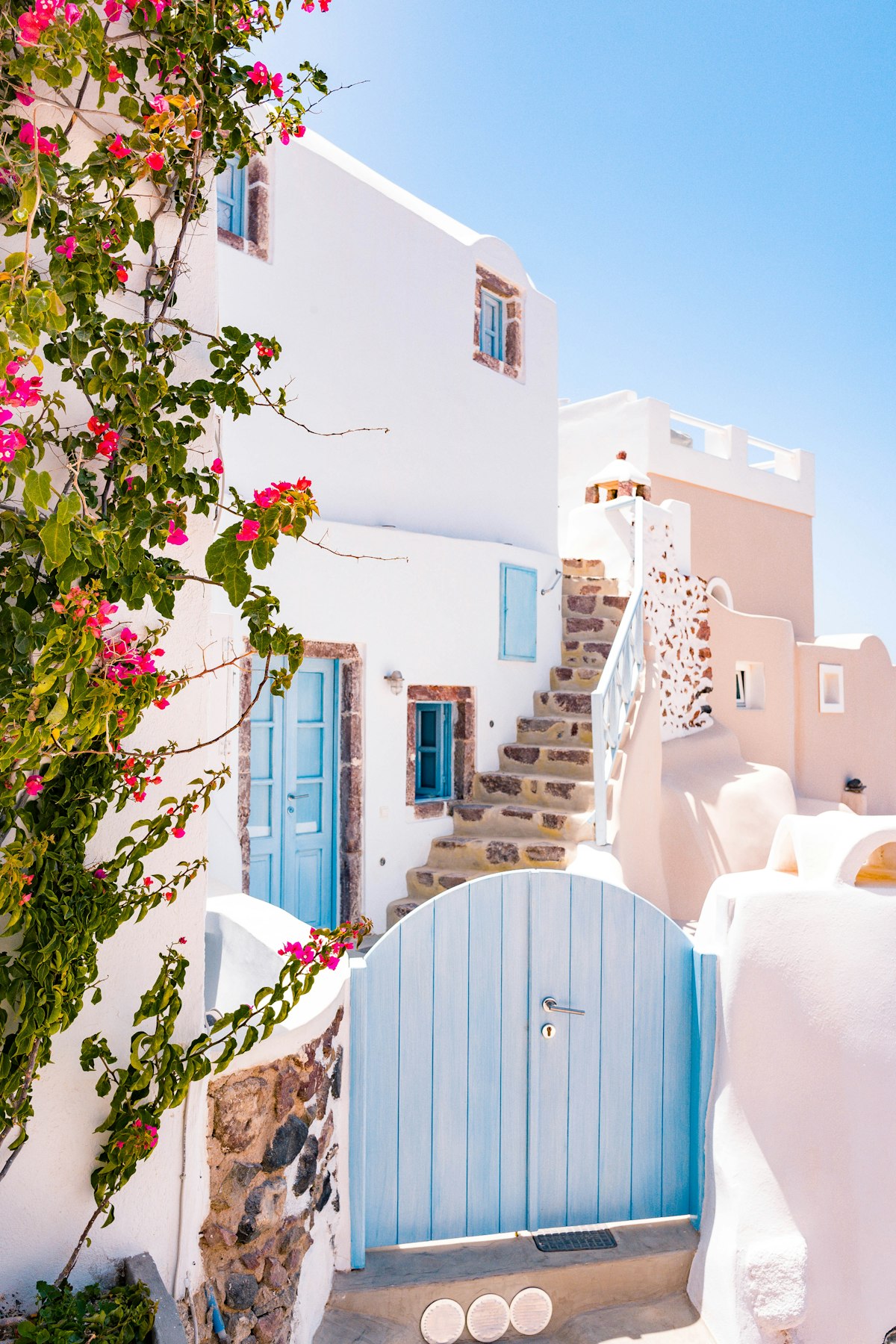
The road from Menton to Castellar climbs through thirteen hairpin bends in seven kilometres, ascending from the Mediterranean's subtropical littoral to a perched settlement at 365 metres where the air is noticeably cooler, the cicadas louder, the silence more emphatic. At the top, the Vieux Village — abandoned in the nineteenth century when residents descended to the more convenient new town below, then progressively restored by a succession of artists, artisans, and discretion-seeking buyers since the 1970s — occupies a limestone spur overlooking the Careï valley, the rooftops of Menton, and the Italian coastline stretching toward Ventimiglia and Bordighera. On a clear morning, which is most mornings, the view extends past Cap Martin to the pale silhouette of Corsica. This is the Riviera at its most concentrated: Mediterranean light, medieval stone, absolute quiet, and the entire theatrical coastline arranged below like an audience.
The Archaeology of Solitude
Castellar's history is one of strategic withdrawal. The original settlement — Castellar Vieux, the ruins of which survive above the current village — was established in the tenth century on an even higher position, chosen for its defensive advantages during the Saracen incursions that devastated the Provençal coast. The Lascaris family, Counts of Ventimiglia, governed the territory from the thirteenth century, constructing the fortified village whose walls, gate towers, and narrow cobbled streets survive substantially intact. The settlement's relationship with Menton below was one of mutual dependency and periodic tension: Castellar provided the defensive high ground and the agricultural production of the terraced hillsides; Menton provided the port, the market, and the commercial connections to Genoa and Nice.
The village's decline in the nineteenth century — as improved roads and the arrival of the railway made Menton's coastal economy more accessible and the hilltop's defensive advantages obsolete — produced the paradoxical preservation that defines Castellar's current character. Because the village was largely abandoned rather than redeveloped, its medieval fabric survived intact: the stone houses with their vaulted ground floors, the covered passages (ponti), the communal bread oven, the washhouse, the church of Saint-Pierre with its Baroque retable. When the restoration movement began in the 1960s and 1970s — part of the broader French rediscovery of villages perchés that also revived Èze, Gourdon, and Sainte-Agnès — Castellar offered a medieval settlement of unusual completeness, its authenticity guaranteed by decades of benign neglect.
The Border Condition
Castellar's position — essentially on the Franco-Italian frontier, closer to Ventimiglia than to Nice — has always given it a liminal quality that distinguishes it from the more thoroughly French perched villages of the Var and the Alpes-Maritimes interior. The dialect spoken by the remaining elderly native residents contains Italian elements; the architecture shows Ligurian influences in its proportions and materials; the cuisine blends Provençal and Italian traditions with a naturalness that reflects centuries of cultural exchange across a border that was, until the mid-twentieth century, more administrative convenience than cultural barrier.
This borderland character produces a particular atmosphere that serious Riviera connoisseurs recognise and value. Castellar does not perform its charm for visitors in the way that Èze or Saint-Paul-de-Vence must; it has no galleries selling Provençal clichés, no tour bus parking, no restaurants with laminated multilingual menus. What it has instead is an authenticity that derives from genuine function: the village is inhabited year-round by a small community of permanent residents — artists, writers, retirees, and a handful of families who maintain the agricultural terraces — whose presence ensures that the streets are lived in rather than merely walked through. The single restaurant operates with the hours and the attitude of a village establishment that serves neighbours rather than tourists. The grocery van visits twice weekly. The silence, when the mistral is not blowing, is extraordinary.
The Terraced Landscape
The agricultural terraces (restanques) that cascade down the hillsides below Castellar represent one of the Riviera's most remarkable and least appreciated cultural landscapes. Built over centuries from the limestone that constitutes the hillside's geological substrate, these dry-stone terraces created the horizontal surfaces on which olive trees, citrus groves, and market gardens could be cultivated on gradients that would otherwise support only scrub. The terrace system extends from the village down to the Careï valley floor — a vertical drop of several hundred metres — and its maintenance requires the continuous repair of retaining walls whose combined length, in the Castellar commune alone, has been estimated at over forty kilometres.
The terraces' current condition reflects a familiar Mediterranean narrative: progressive abandonment as agricultural labour became economically unviable, followed by selective restoration driven by the aesthetic and ecological values that the abandoned terraces represent. Several properties in and around Castellar have integrated restored terraces into their grounds — producing olive oil from centenary trees, maintaining citrus gardens, and cultivating the kitchen gardens that supply the village's domestic economy. The restored terraces also function as natural fire breaks and water management systems, a practical consideration in a region where summer forest fires represent an increasing threat to hilltop properties.
Property: The Most Private Addresses on the Riviera
The Castellar property market operates with a discretion that is less deliberate strategy than structural consequence. There are, within the Vieux Village, approximately sixty houses — most of them restored to varying standards since the 1970s, ranging from modest one-bedroom dwellings to multi-level village houses of 150-200 square metres with roof terraces commanding the full coastal panorama. These properties change hands infrequently (perhaps three to five transactions per year), at prices that reflect both their exceptional position and their inherent limitations: no vehicle access within the village walls, stone construction that complicates renovation, and a location that requires car access for any interaction with the modern world below.
Current values for restored village houses range from approximately €4,000 to €7,000 per square metre — figures that are modest by coastal Riviera standards but that represent significant appreciation from the near-zero values of the 1960s and the €1,000-€2,000 range that prevailed into the early 2000s. The premium properties — the corner houses with dual-aspect views, the houses with large roof terraces, the rare properties with small gardens — command the upper end of this range and attract buyers for whom the combination of medieval authenticity, panoramic position, and absolute privacy constitutes a value proposition unavailable at any price on the coast below.
Beyond the village walls, the broader Castellar commune contains villas and bastides on larger plots — properties of 200-400 square metres on grounds of half a hectare to several hectares, typically positioned on the hillside between the old and new villages, with views that encompass both the coast and the mountain hinterland. These properties, in the €800,000-€2,500,000 range, offer a Riviera lifestyle that is fundamentally different from the coastal model: space, silence, agricultural land, and a relationship with the landscape that is participatory rather than spectatorial.
Verdict
Castellar represents the Riviera's most eloquent answer to the question that every serious buyer eventually asks: is there anywhere left on the Côte d'Azur where the landscape hasn't been consumed by its own legend? Thirteen hairpin bends above Menton, in a medieval village whose restoration has been guided by inhabitants rather than investors, the answer is yes — but only for those willing to accept the terms that a perched village imposes: limited space, limited access, limited convenience, and unlimited views, silence, and the particular luxury of living in a place that does not need you to admire it.
Published by Latitudes Media · Riviera Latitudes