Cap d'Antibes & Hôtel du Cap-Eden-Roc: How the Riviera's Most Legendary Peninsula Became the Mediterranean's Most Mythologically Charged Luxury Address
March 27, 2026 · 17 min read
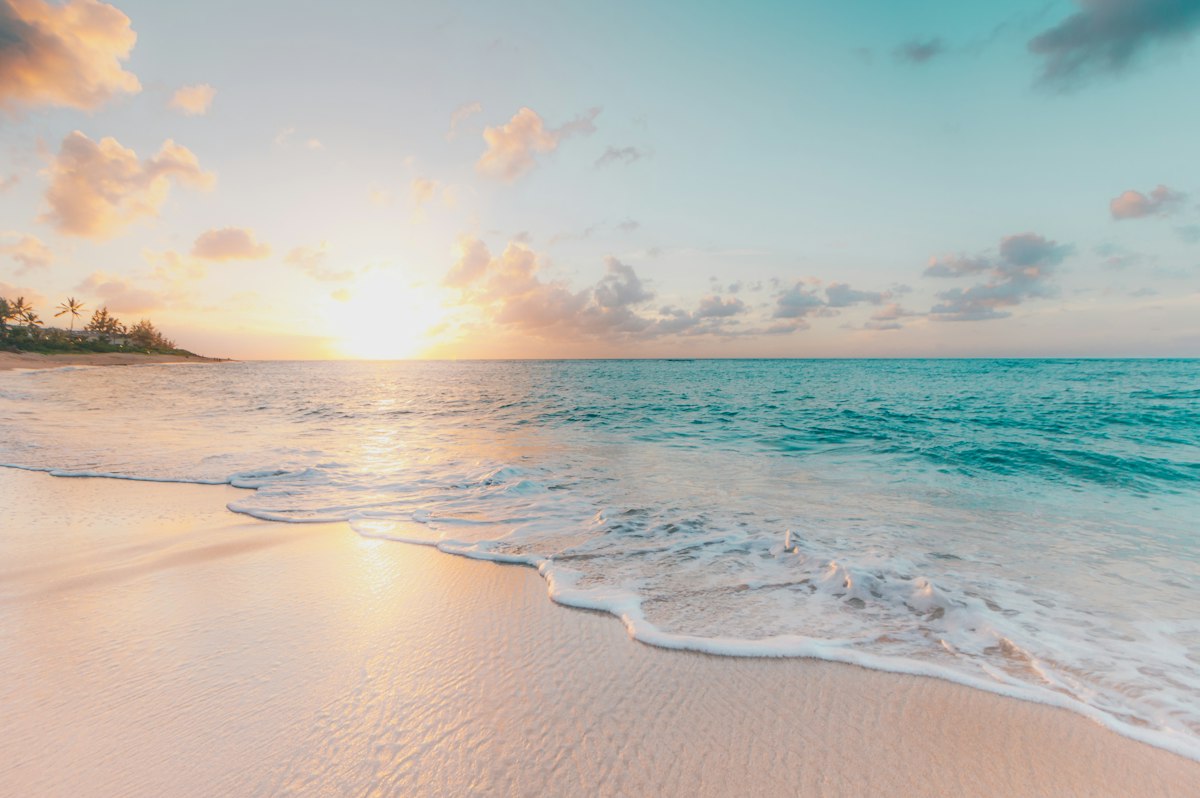
Cap d'Antibes is a peninsula approximately three kilometres long and two kilometres wide, protruding into the Mediterranean between the Baie des Anges and the Golfe Juan. Its geographical dimensions are modest. Its mythological dimensions are without limit. No other comparable area of coastal real estate — not Cap Ferrat, not the Amalfi Coast, not Malibu — has generated such a sustained density of literary, cinematic, and social mythology. F. Scott Fitzgerald set "Tender Is the Night" here. The Murphys — Gerald and Sara, the Jazz Age's most influential expatriate hosts — invented the modern concept of summer on the Riviera here. The Hôtel du Cap-Eden-Roc, the peninsula's defining institution, has hosted more concentrated celebrity, wealth, and social performance per square metre of poolside than any other hotel on earth. Cap d'Antibes is not a place you visit; it is a myth you enter, and the peninsula's real estate prices — among the highest on the Côte d'Azur — reflect not acreage but access to that mythology.
The Invention of Summer: The Murphys and the Riviera's Great Reversal
Before the Murphys arrived in 1923, the French Riviera was a winter destination. The British and Russian aristocracies who had colonised Nice, Cannes, and Monte Carlo since the mid-nineteenth century came for the mild winters and departed before summer's heat arrived. The concept of a Mediterranean summer holiday — sunbathing, swimming, outdoor living — did not exist in its modern form. Gerald and Sara Murphy, wealthy, cultured Americans with an instinct for living that their friend Fitzgerald would immortalise as a social art form, changed this by a single, apparently simple act: they stayed through the summer.
The Murphys' summer at Cap d'Antibes — initially at the Hôtel du Cap, which they persuaded to remain open for the season, and subsequently at their rented Villa America on the peninsula's western shore — created a template that would reshape the entire Mediterranean leisure economy. They swam in the sea (then considered eccentric). They sunbathed (then considered unhealthy). They entertained on the beach and in the garden with a hospitality that combined American informality with aesthetic precision — the food was excellent, the conversation was brilliant, the guest list was impeccable (Picasso, Hemingway, Dos Passos, Léger, Cole Porter), and the atmosphere was one of cultivated pleasure that made everything that came before seem stiff, indoor, and Victorian.
Fitzgerald captured this in "Tender Is the Night" (1934), whose opening pages describe the fictional Hôtel des Étrangers on a beach that is transparently the Garoupe — the small cove on the Cap's eastern shore that the Murphys had personally cleared of seaweed and rocks to create a private beach. Dick and Nicole Diver — the novel's tragic protagonists, modelled loosely on the Murphys — embody the seductive and ultimately corrosive mythology of expatriate luxury that Cap d'Antibes would generate for the rest of the century. The Cap in Fitzgerald's telling is paradise with a half-life: beautiful, intoxicating, and ultimately unsustainable. This tension — between the promise of Mediterranean perfection and its eventual dissolution — has defined the peninsula's literary and social resonance ever since.
Hôtel du Cap-Eden-Roc: The World's Most Exclusive Poolside
The Hôtel du Cap — originally the Villa Soleil, built in 1870 as a retreat for writers by the publisher Auguste de Villemessant — occupies the highest point of the peninsula, its white Neoclassical façade commanding views of both the Baie des Anges to the east and the Golfe Juan to the west. The hotel's principal building, set in ten hectares of pine-shaded grounds, projects an architectural authority that is deliberately institutional rather than domestic: this is not a villa pretending to be a hotel but a hotel that has always understood itself as a public institution of private luxury.
The Eden-Roc — the pavilion and saltwater pool carved into the rocks at the peninsula's southern tip, connected to the main hotel by a winding path through the gardens — is the hotel's true centre of gravity and, arguably, the most photographed poolside in the world. The pool, cut directly from the limestone cliffs above the Mediterranean, provides a swimming experience whose aesthetic perfection — turquoise water, white rock, deep blue sea beyond — has been reproduced in approximately ten thousand magazine covers but can only be experienced in one location. The restaurant terrace adjacent to the pool serves lunch to an audience that is simultaneously dining and performing, every table visible to every other table in a social geometry that makes anonymity impossible and discretion performative.
The hotel's pricing — rooms during the Cannes Film Festival week command €3,000-€15,000 per night, with suites significantly more — reflects a positioning that is not competitive but categorical. The Hôtel du Cap does not compete with other Riviera hotels; it occupies a market position that other hotels aspire to. Its 117 rooms and suites are fully booked months in advance for the season, and its waitlist for the Cannes period is measured not in days but in years. The hotel famously accepted only cash until relatively recently — a policy that was not an inconvenience for its clientele but a statement of the relationship between the institution and its guests: if you need to ask about payment methods, you are asking the wrong question.
The Cannes Connection: Festival as Pilgrimage
The annual Cannes Film Festival — held twelve kilometres north of the Cap, along the Croisette — transforms Cap d'Antibes from a luxury address into the most concentrated gathering of entertainment industry power on earth. During the festival's twelve days in May, the Hôtel du Cap becomes the unofficial headquarters of the global film industry: studio heads, producers, agents, and stars who would never share a hotel in Los Angeles share the Eden-Roc terrace with a proximity that the festival's social physics make unavoidable. The annual amfAR gala — held at the hotel since the 1990s — raises tens of millions for AIDS research in an evening whose ticket prices (€25,000-€100,000) and auction lots (Damien Hirst sculptures, private concerts, Cartier diamonds) reflect the wealth concentrated in the room.
For the film industry, a room at the Hôtel du Cap during Cannes is not accommodation but infrastructure — a business address whose prestige facilitates meetings that would be difficult to arrange in any other setting. The hotel's gardens, terraces, and private dining rooms function as the festival's most productive negotiation spaces, where deals are closed with a handshake under the parasol pines that would require months of emails in a corporate office. The Cap, during Cannes, demonstrates a truth about ultra-luxury hospitality that other hotels understand intellectually but cannot replicate physically: at a certain level, the hotel is not a place where business happens but the reason business can happen at all.
The Real Estate: Gardens Behind Walls
Beyond the hotel, Cap d'Antibes is one of the Côte d'Azur's most jealously guarded residential enclaves. The peninsula's villas — many dating from the Belle Époque, hidden behind walls of stone and vegetation that make the streetscape appear almost rural — house a concentration of wealth that local estate agents discuss with the discretion appropriate to transactions that can exceed €50 million. The Sentier du Littoral — the coastal path that circumnavigates the Cap, providing public access to the shoreline — offers glimpses of properties whose gardens descend to private beaches and boat landings, but the houses themselves are engineered to be invisible from the path, presenting nothing but pine canopy and high walls to the passing walker.
The most celebrated properties — the Villa Eilenroc (now owned by the city of Antibes and open to visitors), the former Villa America, the properties along the Boulevard du Cap — represent a real estate culture where value is determined not by square metres or amenities but by history, position, and the ineffable quality of address. A villa on Cap d'Antibes is not merely waterfront property; it is membership in a community whose social register extends from the Murphys and Fitzgerald to the contemporary entertainment and technology fortunes that have replaced them. The money has changed; the mythology has not.
La Garoupe: The Beach That Changed Everything
La Garoupe — the small beach on the Cap's eastern shore, facing Nice across the Baie des Anges — is where the modern Mediterranean summer was invented. Before the Murphys cleared it and adopted it as their personal beach in the 1920s, it was an unremarkable cove accessible by a steep path through the pines. Today it is divided between a public section and several private beach clubs, including the Belles Rives and the Garoupe Beach, where sunbeds command €80-€150 per day and the clientele arrives by tender from yachts anchored in the bay.
The beach's transformation from forgotten cove to luxury institution illustrates a broader truth about Cap d'Antibes: the peninsula's value was not discovered but created, by a specific group of people at a specific moment, and that act of creation has been continuously reinforced for a century. Every summer at La Garoupe is a re-enactment of the original summer — the Murphys' summer — and the beach's enduring prestige rests on the unstated understanding that to lie on this particular sand, looking at this particular sea, is to participate in a tradition that includes Fitzgerald, Picasso, and every subsequent generation of beautiful, wealthy, and culturally ambitious people who have made the Cap their summer address.
The Lighthouse and the Chapel: Cap d'Antibes' Quiet Sacred
At the peninsula's highest point, near the Hôtel du Cap, stands the Phare de la Garoupe — a working lighthouse — and the Chapelle Notre-Dame de la Garoupe, a small pilgrimage church housing a collection of ex-votos from sailors and a venerated wooden Virgin attributed to the fourteenth century. The juxtaposition is characteristically Provençal: practical navigation and sacred devotion, lighthouse and chapel, occupying the same hilltop. On clear days, the view from the lighthouse platform encompasses the entire Baie des Anges, the snow-capped Alps, the Lérins Islands, and the Estérel massif — a 360-degree panorama that explains, in purely visual terms, why this particular promontory has commanded such disproportionate attention for so long.
The chapel, visited by a steady stream of worshippers and tourists, provides a counterpoint to the peninsula's dominant luxury narrative. Cap d'Antibes was a sacred site — a navigation point and a place of maritime devotion — long before it became a real estate brand. The ex-votos in the chapel, many depicting storms, shipwrecks, and miraculous rescues, testify to a relationship with the sea that predates and transcends the leisure economy. For every yacht anchored off La Garoupe, there are centuries of fishing boats that passed the Cap's cliffs with prayers to the Virgin of the lighthouse. The peninsula remembers both.
Verdict
Cap d'Antibes is the Riviera's creation myth made real estate — the specific, mappable location where the modern Mediterranean luxury holiday was invented and from which it spread to every resort coast on earth. The Murphys' summer, Fitzgerald's novel, the Eden-Roc's poolside, the Cannes Festival's power lunches, the walled villas and their invisible gardens — all contribute to a mythology so dense and so continuously reinforced that the peninsula functions less as a geographical feature than as a cultural idea. To own, to stay, or even to walk the coastal path of Cap d'Antibes is to participate in a story that the twentieth century wrote and the twenty-first century continues to read, revise, and — at €50 million per villa — acquire. The peninsula is not expensive because it is beautiful. It is expensive because it is a story, and it is the best story the Riviera has ever told.