Beaulieu-sur-Mer: How the Belle Époque's Favourite Winter Resort Became the Riviera's Most Climatically Privileged Luxury Address
March 26, 2026 · 12 min read
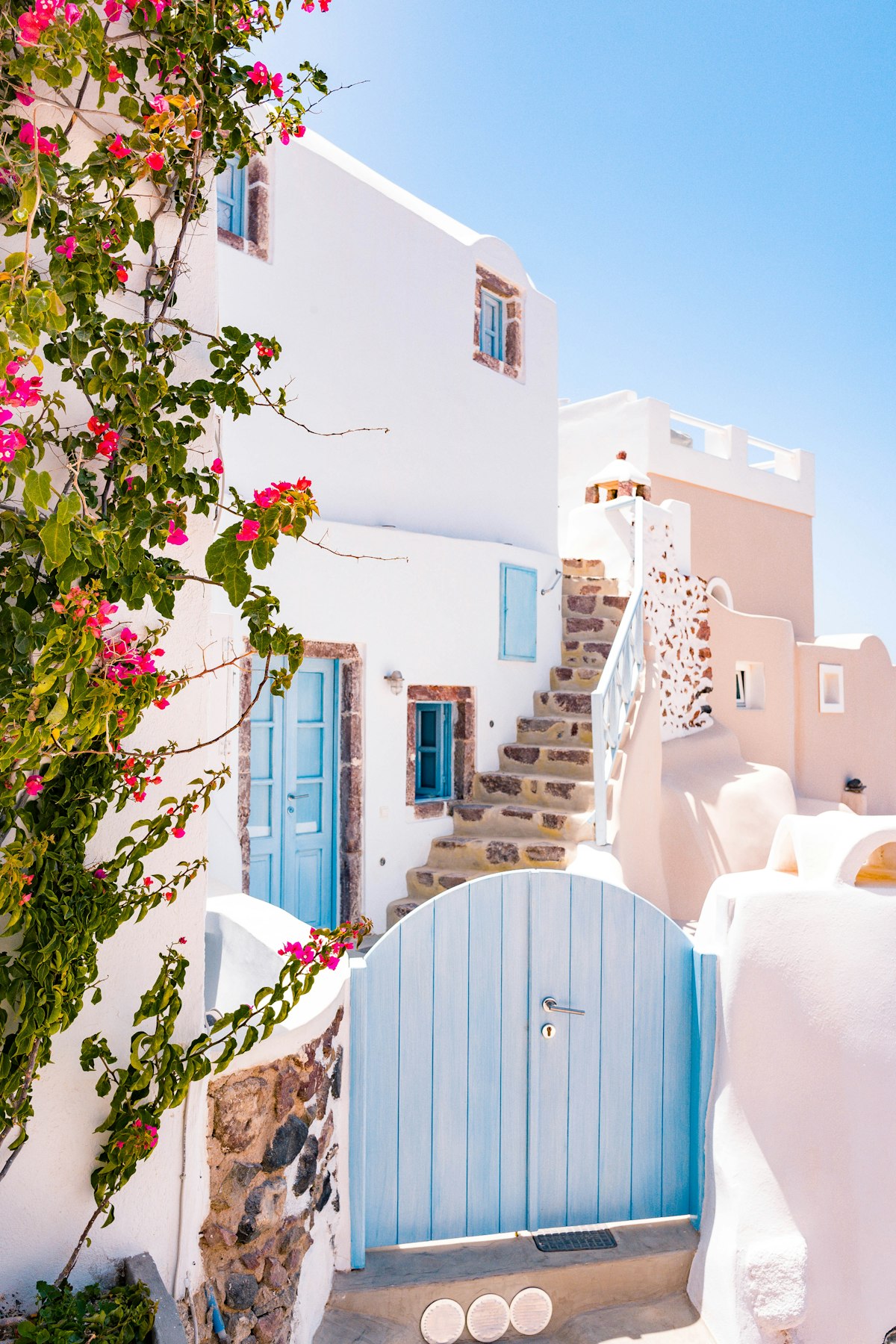
Between the vertiginous peninsula of Cap Ferrat and the ancient fortress of Èze, there exists a slender bay so perfectly sheltered from the mistral, so precisely oriented toward the African coast, that its microclimate registers temperatures consistently three to four degrees warmer than Nice, barely ten kilometres to the west. This is Beaulieu-sur-Mer — a commune whose very name, "beautiful place by the sea," was bestowed not by its medieval inhabitants but by Napoléon Bonaparte, who recognised upon passing through what Victorian aristocrats would later confirm: that this particular fold in the Riviera coastline possesses a climatic perfection approaching the botanical.
The Microclimate: Nature's Architecture of Warmth
Beaulieu's extraordinary climate is no subjective impression but a measurable meteorological phenomenon. The commune sits within an amphitheatre of limestone hills that rise steeply to 550 metres within two kilometres of the shoreline, creating a natural windbreak against the mistral — that brutal north-westerly that can drive temperatures on the exposed Riviera coast down by fifteen degrees in hours. Simultaneously, the bay's southern orientation captures maximum solar radiation throughout the winter months, while the thermal mass of the deep Mediterranean water immediately offshore moderates nocturnal cooling.
The botanical consequences are visible everywhere. Beaulieu supports species that struggle even in Nice: mature date palms producing actual fruit, bird-of-paradise plants flowering outdoors year-round, and, most remarkably, olive trees whose growth patterns suggest a freeze-free record extending back centuries. The Jardin Exotique de Beaulieu, while less famous than Monaco's equivalent, contains specimens of South African and Mexican succulents that would be impossible outdoors anywhere else on the French mainland.
The Belle Époque: When Royalty Came to Winter
If Beaulieu's microclimate provided the natural foundation, it was the Belle Époque that constructed its social architecture. Between 1880 and 1914, Beaulieu became the preferred winter residence of an extraordinary concentration of European royalty, aristocracy, and industrial wealth. Queen Victoria stayed repeatedly at the Hôtel Bristol, establishing the commune as the single most fashionable wintering address on the entire Côte d'Azur. The Rothschild family, already ensconced on neighbouring Cap Ferrat, treated Beaulieu as their local village. The Russian Grand Dukes, the Vanderbilts, and the Krupps all maintained seasonal residences here.
This concentrated patronage produced an architectural legacy of extraordinary density. The Hôtel Bristol (1898), now converted to residences, represents one of the finest Belle Époque hotel façades surviving on the Riviera — its ornate balconies and mansard roof visible from the sea like a wedding cake set against the mountain. The Villa Kérylos, built between 1902 and 1908 by archaeologist Théodore Reinach as a precise reconstruction of a second-century-BC Greek villa, remains the most extraordinary piece of archaeological architecture in France: a building where every piece of furniture, every mosaic, every bronze fitting was designed according to ancient Greek originals, yet which functions as a comfortable Edwardian residence.
The Port: Intimacy at Anchor
Beaulieu's port, tucked into the natural harbour between the Baie des Fourmis and the base of Cap Ferrat, offers something increasingly rare on the Côte d'Azur: a marina whose scale remains human. With approximately 800 berths, it accommodates vessels up to forty metres — substantial yachts by any measure — yet without the industrial atmosphere of Antibes's Port Vauban or the performative excess of Monaco's Port Hercule. The quayside restaurants, particularly during the evening passeggiata when the harbour lights reflect off the water and the mountains behind glow pink with alpenglow, offer a dining experience that feels genuinely Mediterranean rather than manufactured for tourism.
The Promenade Maurice Rouvier
Perhaps Beaulieu's single most distinctive luxury asset is the Promenade Maurice Rouvier — a pedestrian path that follows the coastline from the Baie des Fourmis around to Saint-Jean-Cap-Ferrat, offering what many consider the most beautiful seaside walk on the entire French Riviera. The path winds between the sea and the gardens of Belle Époque villas, through tunnels of maritime pines and bougainvillea, past rock formations where the limestone meets the sea in sculptural abstractions. On clear winter mornings, when the light has that particular Riviera quality — hard, precise, almost crystalline — the view from this promenade toward Cap Ferrat encompasses a Mediterranean whose colour shifts from emerald to sapphire within a single bay.
Real Estate: The Cognoscenti's Choice
Beaulieu's property market occupies a distinctive niche within the Riviera's luxury landscape. Prices are substantial — beachfront apartments regularly exceed €15,000 per square metre, and the rare Belle Époque villa commands prices comparable to Cap Ferrat — but they remain consistently below the peak valuations of Cap Ferrat itself, Monaco, and even certain addresses in Saint-Jean. This differential reflects not a deficit of quality but a surplus of discretion: Beaulieu attracts buyers who have decided that the Riviera's most famous addresses carry a social freight they prefer to avoid.
The typical Beaulieu buyer is a second- or third-generation wealth holder — often French, Swiss, or Scandinavian — who values the commune's walkability, its genuine village atmosphere (the daily market on Place du Général de Gaulle remains a functioning neighbourhood market, not a tourist attraction), and its position as a base for exploring the eastern Riviera on foot: Cap Ferrat, Èze, and the coastal paths that connect them are all accessible without a car, a practical luxury that the congested western Riviera cannot offer.
The Enduring Privilege
Beaulieu-sur-Mer's luxury proposition is, at its core, climatic: a demonstration that the most enduring privilege is not what can be built or bought but what can be found. The microclimate that drew Queen Victoria and the Rothschilds — that particular warmth, that particular light, that particular protection from the forces that make even beautiful coastlines uncomfortable — remains exactly as it was in 1890. Buildings can be demolished and rebuilt, social cachet can migrate from one address to another, but the angle at which sunlight enters the Baie des Fourmis on a January afternoon, warming the limestone walls of the Promenade Maurice Rouvier to a temperature that permits outdoor dining — this is permanent. It is luxury written in geology, and it cannot be replicated.
Part of the Latitudes Media network